Why Is My Dog Barking at Nothing: AI Behavior Guide
Wondering why is my dog barking at nothing? Discover how AI behavior analysis decodes hidden triggers, sensory cues, and breed-specific habits in 2026.

Why Is My Dog Barking at Nothing? The Science of Canine Senses
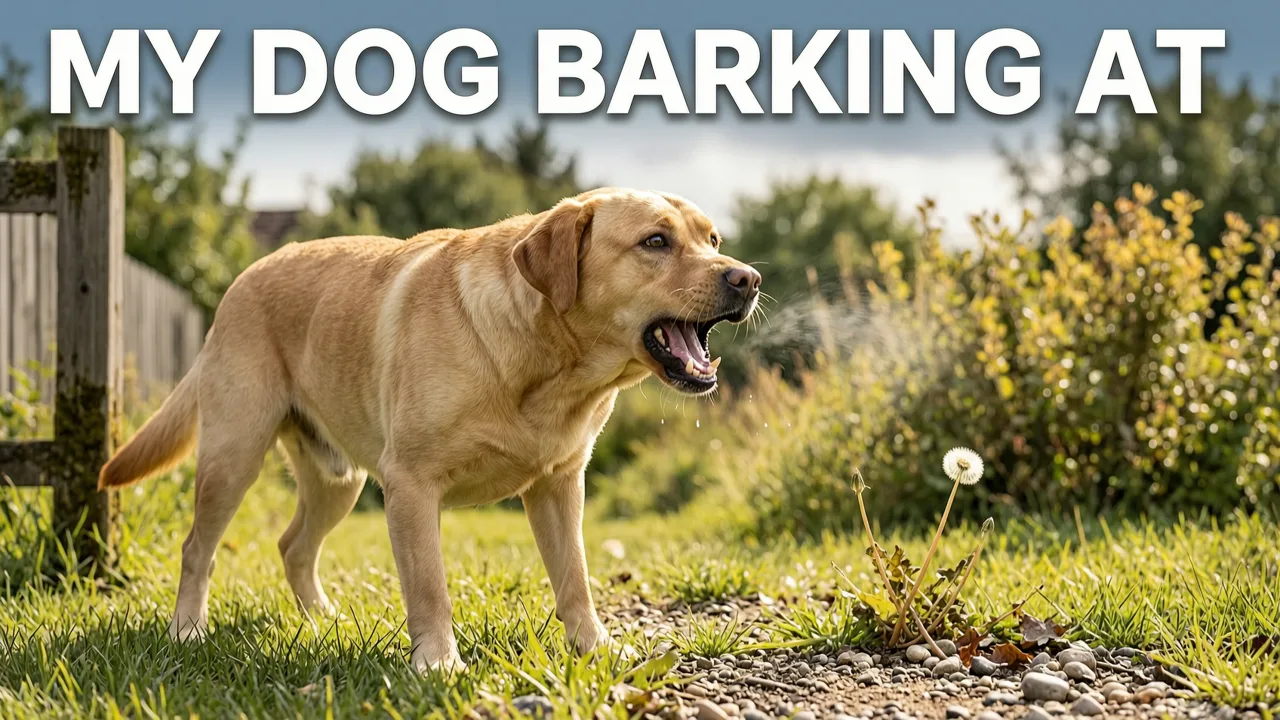
When you hear your dog barking at an empty corner of the room, it is natural to feel confused or concerned. However, your dog is never truly barking at nothing. They are reacting to stimuli—such as ultrasonic frequencies, faint odors, or micro-movements—that fall entirely outside human sensory perception. If you are asking, "why is my dog barking at nothing," the answer lies in understanding their heightened biological senses and leveraging modern AI behavior analysis to decode their communication.
Dogs experience the world through a vastly different sensory lens than humans do. While we rely primarily on vision, canines prioritize auditory and olfactory inputs. A dog’s hearing range extends up to 45,000 to 65,000 Hertz, compared to the human limit of roughly 20,000 Hertz. This means your pet can hear the hum of electrical wiring, the distant approach of a vehicle, or the ultrasonic calls of rodents inside the walls. Similarly, a dog possesses up to 300 million olfactory receptors in their nose, compared to our six million. They can detect minute chemical changes in the air, including pheromones from other animals or subtle shifts in barometric pressure before a storm.
Decoding the "Nothing": Common Hidden Triggers

To address unexplained barking, we must first identify the invisible triggers that provoke the behavior. By categorizing these triggers, you can better understand your dog's environment and reduce their anxiety.
High-Frequency Sounds and Electronics
Modern homes are filled with electronic devices that emit high-pitched noises. LED light drivers, smart home hubs, chargers, and certain appliances can produce frequencies that are inaudible to humans but highly irritating or alarming to dogs. If your dog is barking at a blank wall, they may actually be reacting to a failing capacitor in a device hidden behind the drywall.
Subtle Environmental Changes and Pests
Dogs are acutely aware of their territory. A faint scratching sound inside a wall cavity, the scent of a neighborhood cat lingering near a window seal, or the movement of insects inside a light fixture can trigger a territorial bark. Because humans cannot see, hear, or smell these intrusions, the dog appears to be barking at thin air.
Cognitive Aging and Canine Cognitive Dysfunction
In senior dogs, unexplained barking is sometimes linked to Canine Cognitive Dysfunction (CCD), a condition similar to dementia in humans. Dogs with CCD may bark due to confusion, disorientation, or changes in their sleep-wake cycles. If an older dog is barking at walls or into the dark without an obvious external trigger, it is essential to consult a veterinarian to rule out neurological decline or underlying pain.
How AI Technology Analyzes Canine Communication in 2026

Understanding the biological "why" is only the first step. In 2026, artificial intelligence has revolutionized how we interpret animal behavior by translating complex acoustic and visual data into actionable insights. Modern AI models do not just listen to the volume of a bark; they analyze the intricate layers of canine communication.
Acoustic Layer: Pitch, Duration, and Frequency
The underlying architecture of modern acoustic AI models, similar to the foundational frameworks detailed in OpenAI documentation, utilizes deep neural networks to map complex audio patterns to specific emotional and behavioral states. An AI algorithm breaks down a bark into its fundamental frequencies, measuring the pitch, the duration of the vocalization, and the intervals between repetitions. A short, sharp bark indicates alertness, while a prolonged, lower-pitched growl signals anxiety or a warning.
Visual Layer: Posture and Micro-Expressions
Advanced applications now combine audio analysis with computer vision to read a dog's body language simultaneously. By analyzing ear position, tail carriage, and muscle tension, the AI builds a comprehensive profile of the dog's emotional state. Furthermore, responsible AI development, as outlined in Google AI guidance, ensures that audio and video data processed by these applications remains secure, private, and ethically handled directly on the user's device.
A Comparison of Barking Types and Their Meanings
To help you manually assess your dog's vocalizations before relying on digital tools, here is a breakdown of common bark profiles and their associated meanings.
| Bark Type | Acoustic Profile | Probable Trigger | Recommended Action |
|---|---|---|---|
| Alert Bark | Sharp, rapid, mid-pitch | Someone at the door, unusual noise | Acknowledge the alert, then redirect focus. |
| Boredom Bark | Repetitive, monotonous, mid-to-low pitch | Lack of stimulation, isolation | Increase physical exercise and mental enrichment. |
| Anxiety Bark | Higher pitch, whining undertones, erratic | Separation, loud noises, unfamiliar environments | Provide a safe space, use calming aids, desensitize. |
| Compulsive Bark | Continuous, rhythmic, seemingly unprovoked | Stress, CCD, or underlying medical pain | Consult a veterinarian or certified behaviorist. |
Actionable Steps to Address Unexplained Barking
Once you understand that your dog is reacting to hidden stimuli, you can implement a structured approach to manage and reduce the behavior.
Observe and Record Body Language
Vocalizations are only half of the conversation. To fully understand your pet, you must observe their physical cues in real time. Pay attention to where their gaze is fixed, whether their ears are pinned back or swiveled forward, and if their body is stiff or relaxed. For a comprehensive breakdown of these physical cues, you can refer to our detailed guide on how to read dog body language. Understanding the physical context of the bark will immediately narrow down the potential triggers.
Use AI-Powered Translation Tools
Because human senses are limited, leveraging technology is the most effective way to bridge the communication gap. A dog bark translator free app can analyze your dog's vocalizations in real time, identifying whether the bark stems from anxiety, alertness, or frustration. When selecting a tool, ensure it offers breed-aware translation, as a Beagle's vocalizations carry different baseline frequencies than a German Shepherd's. Utilizing the best AI dog translator app ensures that the acoustic analysis is calibrated to your specific dog's breed and historical behavior patterns, providing highly accurate emotional decoding.
Implement Environmental Enrichment and Training
If the AI analysis reveals that the barking is driven by boredom or mild anxiety, environmental enrichment is key. Provide puzzle feeders, scent games, and scheduled training sessions to drain their mental energy. If the barking is triggered by high-frequency electronics, try to identify and replace the offending device, or use white noise machines to mask the sound. For anxiety-driven barking, personalized training sessions generated by your AI app can help desensitize your dog to the hidden triggers over time.
When to Consult a Veterinarian or Behaviorist
While AI tools are incredibly effective at decoding everyday behavioral quirks, they are not a replacement for professional medical advice. If your dog's unexplained barking is accompanied by other symptoms—such as pacing, panting, changes in appetite, or aggression—it is crucial to schedule a veterinary examination. Sudden changes in behavior can indicate underlying pain, thyroid imbalances, or neurological issues. A veterinarian can rule out medical causes, and a certified canine behaviorist can help you develop a targeted modification plan for complex anxiety or compulsive disorders.
Conclusion
When you ask, "why is my dog barking at nothing," the answer is always rooted in the incredible, hyper-aware sensory world your dog inhabits. They are not acting out; they are communicating about a reality they perceive much more deeply than we do. By combining an understanding of canine biology with the advanced acoustic and visual analysis provided by modern AI, you can decode these hidden triggers and respond with empathy and precision.
Ready to bridge the communication gap and understand exactly what your dog is trying to tell you? Download the Dog Bark Translator today to access real-time, breed-aware AI decoding, personalized training plans, and enrichment tools designed to strengthen your bond and support your dog's mental wellbeing.
Frequently Asked Questions
Why does my dog bark at a blank wall?
Dogs have highly sensitive hearing and smell. They may be reacting to high-frequency sounds from electronics hidden in the wall, the faint scratching of pests inside the wall cavity, or subtle shadows and light reflections that humans cannot easily perceive.
Can AI actually understand what my dog is saying?
Yes. Modern AI models analyze the acoustic layers of a bark—including pitch, duration, and frequency—and combine this with visual body language data. By mapping these patterns against large datasets of breed-specific behaviors, AI can accurately identify emotions like alertness, anxiety, or hunger in real time.
Is my senior dog barking at nothing because of dementia?
It is possible. Unexplained or compulsive barking in senior dogs can be a symptom of Canine Cognitive Dysfunction (CCD), which is similar to dementia in humans. If the barking is accompanied by confusion, pacing, or changes in sleep patterns, you should consult a veterinarian for a proper diagnosis.
How can I stop my dog from barking at invisible triggers?
First, try to identify the hidden trigger using AI bark translation and by observing your dog's body language. If the trigger is an electronic hum, mask it with white noise. If it is boredom or anxiety, increase their mental enrichment and use AI-generated personalized training sessions to redirect their focus.
Related Articles


Explore more practical dog care and communication guides.
View all articles