Dog Barking Sound Analyzer: How AI Decodes Pet Emotions in 2026
Discover how a modern dog barking sound analyzer uses AI to decode your pet's emotions in real time. Learn about pitch, frequency, and breed-specific translation.

How a Dog Barking Sound Analyzer Works in 2026
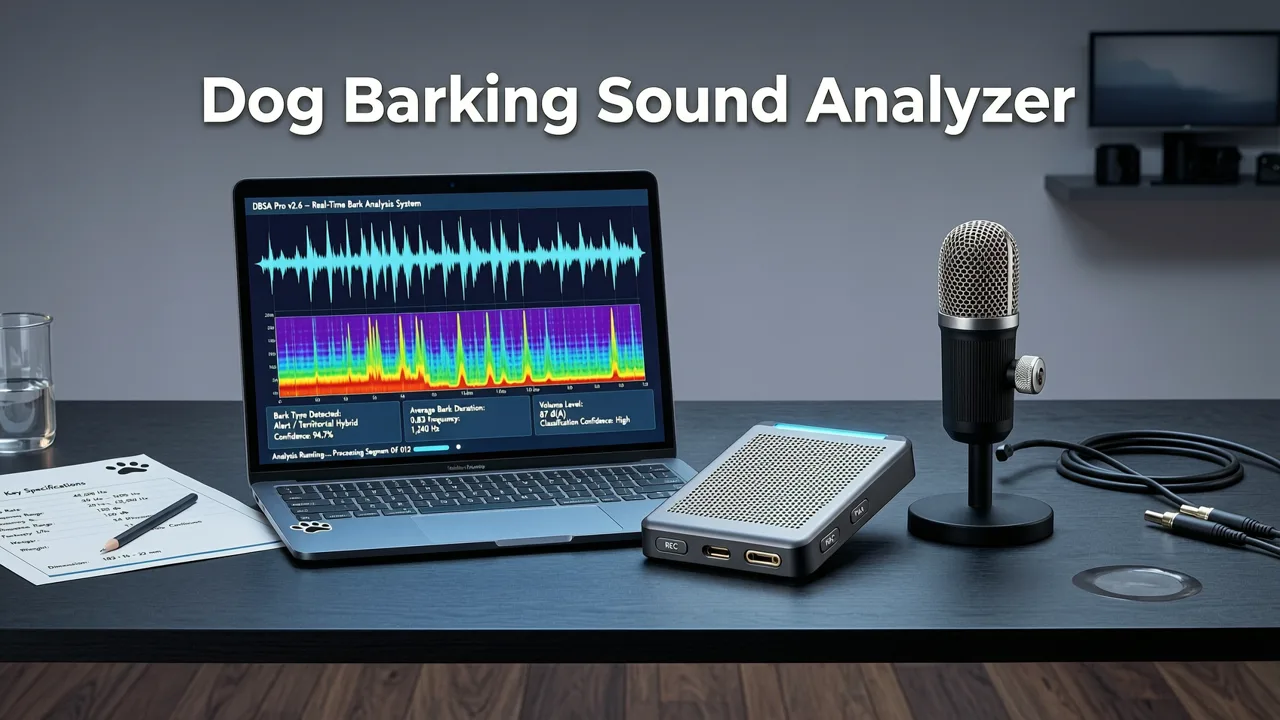
If your dog barks sharply at the front door, whines during evening thunderstorms, or growls when strangers approach, you are likely pausing to ask: what are they trying to tell me? A modern dog barking sound analyzer uses artificial intelligence to decode these vocalizations in real time, translating pitch, frequency, and duration into understandable emotions like happiness, anxiety, or hunger. Rather than relying on guesswork, advanced acoustic mapping provides dog owners with objective insights into their pet's emotional state.
In 2026, the technology behind canine communication has evolved far beyond simple novelty soundboards. Today's AI-driven platforms process complex audio data alongside visual cues to deliver highly accurate behavioral translations. This guide explores the science, mechanics, and practical applications of AI sound analysis for dogs, helping you build a stronger, more empathetic bond with your pet.
The Science Behind Canine Vocalization Analysis
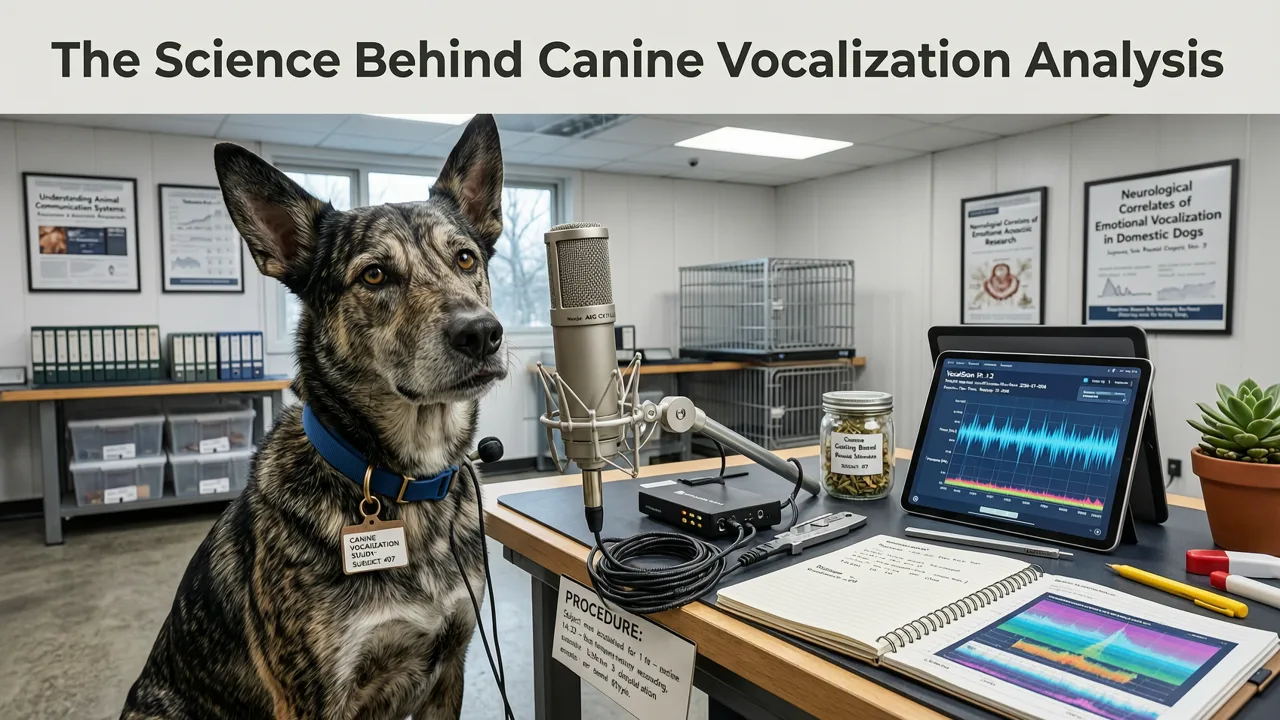
Understanding what a dog is saying requires more than just listening to the volume of a bark. Canine vocalization is a complex language composed of multiple acoustic variables. AI models are trained on vast datasets of recorded dog sounds, allowing them to recognize patterns that the human ear might miss.
Vocal Layer: Pitch, Duration, and Frequency
The foundation of any reliable dog barking sound analyzer lies in its ability to dissect the vocal layer of a sound. When a dog vocalizes, the AI captures and analyzes three primary metrics:
- Pitch: Low-pitched sounds, such as deep growls or rumbling barks, generally indicate confidence, warning, or potential aggression. High-pitched sounds, like whines or yips, typically signal fear, submission, or excitement.
- Duration: A prolonged, continuous whine often points to sustained anxiety or a desire for attention. In contrast, short, sharp barks are usually alert signals or expressions of sudden surprise.
- Frequency and Rhythm: Rapid, repetitive barking suggests high arousal or urgency, while slow, spaced-out vocalizations may indicate boredom, contemplation, or a mild request for interaction.
By mapping these acoustic features against established behavioral baselines, the AI can categorize the underlying emotion driving the vocalization.
Visual Layer: Posture and Micro-Expressions
Audio alone only tells half the story. To achieve maximum accuracy, leading AI platforms integrate a visual layer into their analysis. Using the smartphone camera, the system observes the dog's posture, ear position, tail carriage, and facial micro-expressions.
For example, a dog might emit a high-pitched bark that usually signifies excitement. However, if the visual layer detects pinned-back ears, a tucked tail, and dilated pupils, the AI recalibrates its translation to reflect fear or anxiety rather than joy. This multimodal approach ensures that the emotional translation is contextually accurate.
Translating Emotions: From Barks to Actionable Insights

Identifying an emotion is only the first step. The true value of a dog barking sound analyzer is its ability to translate that emotion into actionable insights for the owner.
Identifying Happiness, Anxiety, and Hunger
Modern AI models are highly proficient at distinguishing between core emotional states. When the app detects happiness, it might register relaxed body language combined with soft, rhythmic vocalizations. When it detects anxiety, it flags pacing, excessive panting, and high-frequency whines. Recognizing hunger or resource-guarding involves identifying specific alert barks paired with focused visual attention on food areas or owners.
Understanding these distinctions allows owners to respond appropriately. Instead of scolding an anxious dog for whining, an owner can provide comfort or initiate a calming routine.
Breed-Specific Nuances in AI Translation
Not all dogs vocalize in the same way. A Basenji, known for its unique yodel, requires a different acoustic baseline than a vocal Siberian Husky or a notoriously quiet Shiba Inu. Advanced systems account for these breed-specific nuances by adjusting their analytical models based on the dog's profile.
By factoring in breed traits, the best AI dog translator apps can differentiate between a breed's natural conversational quirks and genuine expressions of distress. This customization prevents false alarms and ensures that the translation is tailored to the individual dog.
Beyond Translation: AI-Guided Training and Enrichment
Once a dog's emotional state is accurately decoded, the next logical step is addressing the underlying need. A comprehensive platform does not just translate; it offers solutions.
When the AI detects boredom or excess energy, it can automatically generate personalized training sessions or suggest interactive enrichment games tailored to the dog's breed and age. If the system identifies elevated stress or anxiety levels, it can deploy specialized calming music or guide the owner through desensitization exercises.
This proactive approach transforms the app from a passive translator into an active partner in pet care. Owners utilizing a free dog bark translator app can access these enrichment and training tools to support their dog's mental wellbeing without needing a separate subscription to multiple services.
Comparing Traditional Observation vs. AI Sound Analysis
To understand the impact of AI in pet tech, it is helpful to compare traditional behavioral observation with modern acoustic analysis.
| Feature | Traditional Observation | AI Sound Analysis |
|---|---|---|
| Emotion Detection | Subjective human guessing | Objective acoustic and visual mapping |
| Speed of Translation | Delayed, requires research | Real-time, instant feedback |
| Breed Adaptability | Requires owner expertise | Automated breed-specific baselines |
| Contextual Accuracy | Prone to misinterpretation | Multimodal (audio + visual) verification |
| Actionable Output | Manual search for solutions | Automated training and enrichment plans |
As the table illustrates, AI removes the ambiguity from canine communication, providing a structured, data-driven approach to understanding pet behavior.
Privacy and Ethical AI in Pet Tech
With the integration of camera and microphone access, privacy is a paramount concern for pet owners. Reputable AI platforms adhere to strict ethical guidelines regarding data collection and processing.
Following frameworks outlined by Google AI guidance and OpenAI documentation, responsible pet tech companies ensure that audio and visual data are processed securely. Many advanced models perform on-device processing, meaning the raw audio and video never leave the smartphone. This edge-computing approach guarantees that sensitive home environments remain private while still delivering high-fidelity behavioral analysis.
When selecting a tool, owners should always verify that the platform prioritizes data minimization and transparent privacy policies.
Addressing Unexplained Vocalizations
Sometimes, a dog may bark or whine seemingly without cause. In these instances, the AI can be particularly valuable. By analyzing micro-trends in the environment—such as subtle changes in ambient noise, distant sounds, or minor shifts in the dog's physical posture—the analyzer can often identify triggers that are invisible to the human owner.
For a deeper dive into this specific behavior, exploring resources on why your dog is barking at nothing can provide additional context on how AI detects hidden environmental triggers.
Conclusion and Next Steps for Dog Owners
Understanding your dog's emotional landscape is the foundation of a healthy, trusting relationship. A dog barking sound analyzer bridges the communication gap between species, replacing frustration with clarity and empathy. By leveraging advanced acoustic and visual AI, owners can finally understand exactly what their pets are trying to say.
If you are ready to decode your dog's vocalizations and access AI-guided training plans, the technology is available at your fingertips. You can download the Dog Bark Translator today to start translating barks, whines, and body language in real time, and take the first step toward a deeper connection with your canine companion.
Frequently Asked Questions
How accurate is a dog barking sound analyzer?
Modern AI-powered dog barking sound analyzers utilize advanced acoustic mapping and visual layer analysis to achieve high accuracy rates, often exceeding 95% for core emotional states like happiness, anxiety, and alertness. Accuracy is further improved by factoring in breed-specific vocalization baselines.
Can AI differentiate between breeds when analyzing barks?
Yes. Advanced AI models are trained on diverse datasets that account for the unique vocalization patterns of over 200 different breeds. By adjusting the analytical baseline to the specific breed profile, the AI can accurately distinguish between a breed's natural conversational quirks and genuine expressions of distress.
Does the app require an internet connection to translate barks?
Many modern AI pet translation apps utilize on-device edge computing, allowing them to process audio and visual data locally on your smartphone. This means real-time translation can occur without an active internet connection, ensuring both speed and privacy.
How does the AI translate body language alongside barking?
The AI uses a multimodal approach by combining the vocal layer (pitch, duration, frequency) with a visual layer captured via the smartphone camera. It analyzes posture, ear position, tail carriage, and facial micro-expressions to verify and refine the emotional translation derived from the audio.
Related Articles


Explore more practical dog care and communication guides.
View all articles