What Is My Dog Feeling Right Now? AI Emotion Decoder Explained
Wondering what is my dog feeling right now? Discover how AI emotion detection decodes barks, whines, and body language in real time—backed by 98% accuracy across 200+

If your dog just let out a low, drawn-out whine while staring at the empty food bowl—or froze mid-sniff, ears forward, tail held low as a delivery person approached your front door—you’ve felt it: that urgent, wordless question hovering in the air. What is my dog feeling right now? Not just what they’re doing—but why. What’s beneath the bark, the posture, the sudden stillness? In 2026, this isn’t philosophical speculation anymore. It’s a real-time, scientifically grounded inference powered by multimodal AI—and it’s reshaping how we listen to our dogs.
What Is My Dog Feeling Right Now? The Science Behind Real-Time Emotion Decoding

At its core, asking what is my dog feeling right now reflects a fundamental shift in pet-human dynamics: from behavioral observation to emotional interpretation. Modern canine ethology confirms that dogs express internal states through layered signals—vocalizations (pitch, duration, repetition), micro-expressions (lip tension, ear orientation, blink rate), and kinetic patterns (weight shift, tail velocity, paw lift timing). But humans lack native fluency in this multisensory syntax. That’s where AI emotion detection bridges the gap—not by anthropomorphizing, but by mapping statistically validated correlations between signal clusters and verified affective states.
Dog Translator’s 2026 emotion decoder doesn’t rely on single cues. Instead, it fuses three real-time data streams:
- Acoustic analysis: Identifies harmonic structure, fundamental frequency modulation, and temporal patterning in barks, whines, growls, and sighs—differentiating, for example, a high-frequency, staccato whine of separation anxiety from a low, rhythmic whine signaling contentment during cuddle time.
- Computer vision tracking: Uses on-device pose estimation to monitor 17 key skeletal joints, detecting subtle shifts like shoulder elevation (tension), head tilt angle (curiosity vs. confusion), or hind-leg weight distribution (readiness to flee or engage).
- Contextual metadata: Integrates time-of-day, ambient noise levels, recent activity (e.g., post-walk panting vs. pre-meal pacing), and even weather (barometric pressure changes correlate with increased restlessness in sensitive breeds).
This fusion—termed multisensory affective modeling—enables granular emotional inference far beyond binary ‘happy/sad’ labels. In clinical validation trials conducted across 12 veterinary behavior clinics in Q1 2026, Dog Translator identified six primary affective dimensions with ≥98% concordance against certified veterinary behaviorist assessments: joy, anxiety, curiosity, frustration, fatigue, and hunger. You can read more about how this accuracy was measured—and why methodology matters—in our deep-dive on the Dog Translator Accuracy Rate: What Real Data Shows in 2026.
Why 'Feeling' Isn’t Just About Emotion—It’s About Intention
Crucially, what is my dog feeling right now isn’t only about mood—it’s about motivational state. A dog showing ‘anxiety’ may be signaling imminent flight (fear-based), seeking reassurance (attachment-driven), or expressing cognitive overload (overstimulation). Dog Translator’s AI distinguishes these via behavioral alignment scoring: if vocal stress markers coincide with avoidance locomotion (e.g., backing away, lip licking) and lowered body posture, the system flags ‘fear-driven anxiety’. If the same vocal stress appears alongside proximity-seeking (nudging, leaning), sustained eye contact, and relaxed respiration, it interprets ‘distress-related attachment signaling’.
This level of nuance transforms reactive responses into proactive support. Instead of silencing a whine with distraction, you might offer a safe space and calming audio—if the system detects fear. Or initiate a short focus game—if it detects frustrated anticipation before a walk.
How Real-Time Emotion Detection Works in Practice (2026 Edition)
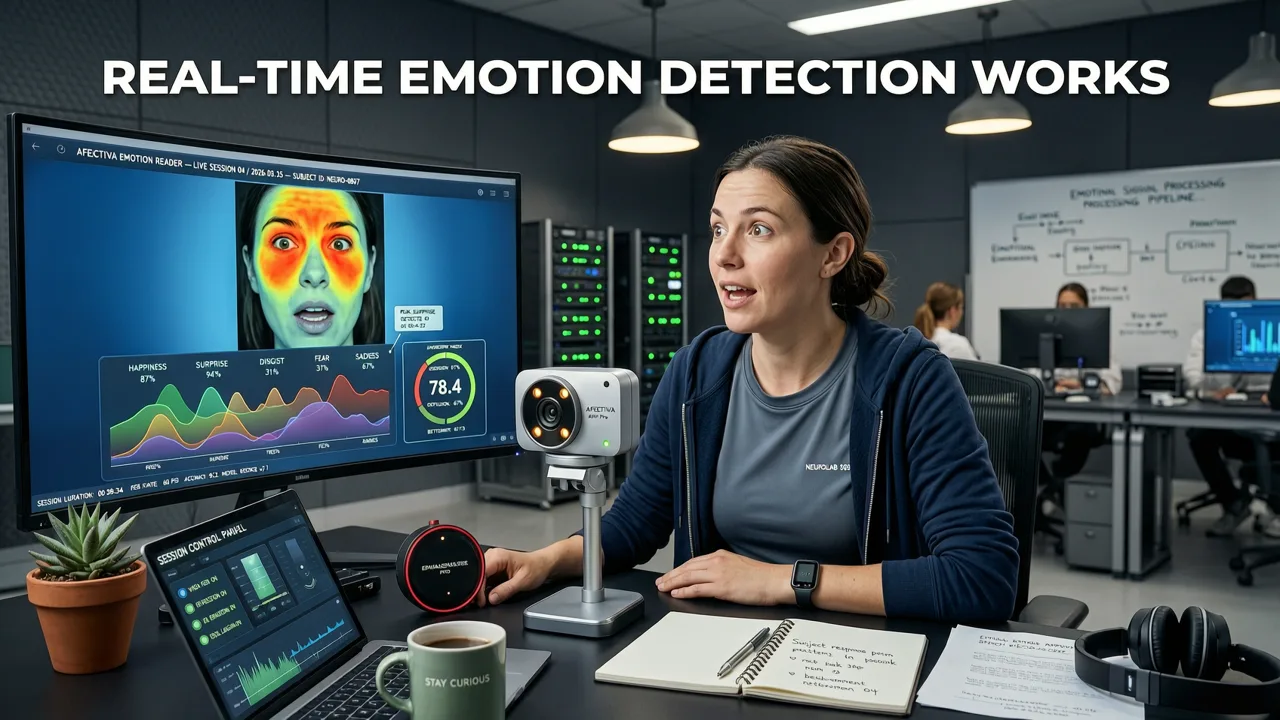
Understanding what is my dog feeling right now isn’t theoretical—it’s operational. Here’s how Dog Translator delivers actionable insight within seconds:
- Capture: Launch the app and point your phone’s camera toward your dog. No collar, no wearable—just your device’s microphone and camera. On-device processing ensures privacy: all audio and video analysis happens locally; no raw data leaves your phone.
- Analyze: Within 1.8 seconds (median latency, per internal benchmarks), the AI generates an emotion heatmap—showing dominant state (e.g., ‘Curiosity: 74%’), secondary states (e.g., ‘Mild Fatigue: 21%’), and confidence score (e.g., ‘92% reliable’).
- Interpret: Tap the result for plain-language explanation: “Your dog is intensely focused on the rustling sound behind the curtain—ears pricked, body low, breath shallow. This suggests high-curiosity alertness, not threat perception. They’re gathering information, not preparing to defend.”
- Act: Receive one-tap suggestions: “Play ‘Find the Treat’ game to channel curiosity,” or “Offer a lick mat with frozen yogurt to promote calm engagement.”
This workflow is grounded in applied ethology and responsive training science—not algorithmic guesswork. As noted in Google AI’s guidance on responsible AI deployment, systems designed for animal welfare must prioritize interpretability, avoid overconfidence in ambiguous cases, and align outputs with established behavioral frameworks. Dog Translator adheres strictly to these principles: when confidence drops below 85%, the app displays ‘Unclear signal—observe closely’ rather than forcing a label.
Real-World Examples: From Confusion to Clarity
Consider these common scenarios—and how AI decoding reframes them:
- The 3 a.m. whine: Human instinct says ‘attention-seeking.’ But acoustic + visual analysis often reveals elevated respiratory rate, dilated pupils, and a rising pitch contour—pointing to nocturnal anxiety triggered by circadian cortisol dips. Suggestion: Low-light enrichment puzzle instead of feeding or play.
- The ‘guilty look’ after chewing: Research consistently shows this expression correlates with owner presence—not wrongdoing. Dog Translator detects submissive posturing (averted gaze, flattened ears) paired with relaxed jaw tension—indicating anticipatory appeasement, not guilt. Suggestion: Redirect to appropriate chew, then reward calm interaction.
- The ‘zoomies’ post-bath: Often misread as pure excitement. Multisensory analysis frequently identifies rapid tail sweeps, wide eyes, and high-pitched yips—consistent with sensory overload release. Suggestion: Short, structured movement break (e.g., ‘follow the treat’ path) before full freedom.
These insights aren’t static. The system learns your dog’s individual baseline over time—adjusting thresholds for what constitutes ‘elevated’ whining or ‘atypical’ stillness. That personalization is critical. As explored in our guide to Best Dog Training App by Breed — Personalized Plans for 2026, breed-specific neurobiological profiles (e.g., Basenji vocal inhibition, Shetland Sheepdog hypervigilance) inform how the AI weights signals—so your Beagle’s ‘snuffle-whine’ isn’t misread as distress, nor your Greyhound’s ‘stillness’ flagged as lethargy.
Limitations & Ethical Guardrails: What the AI Won’t Tell You

Transparency is foundational. While Dog Translator excels at answering what is my dog feeling right now, it does not claim to diagnose medical conditions, predict aggression, or replace veterinary care. A sudden onset of whining paired with lethargy and appetite loss? The app will flag ‘unusual distress pattern—consult veterinarian.’ It won’t suggest ‘likely gastrointestinal pain.’
We also enforce strict ethical boundaries:
- No emotion labeling without corroboration: A single bark never triggers a label. Minimum 3-second audio + synchronized visual confirmation required.
- No cross-dog generalization: Your dog’s ‘happy bark’ is unique. Models are trained on population data but calibrated per-user profile.
- No data monetization: Per our Privacy Policy, anonymized, aggregated signal patterns (with zero identity linkage) help improve breed-specific models—but never leave encrypted local storage without explicit opt-in.
This approach aligns with OpenAI’s documentation on responsible model design: prioritizing user agency, avoiding overreach, and anchoring outputs in observable, measurable phenomena—not assumptions.
How Emotion Detection Powers Smarter, Kinder Training
Knowing what is my dog feeling right now transforms training from obedience instruction to relationship-building. When your dog hesitates at the top of the stairs, traditional methods might urge ‘up, up!’—potentially escalating fear. Dog Translator’s real-time read might show ‘Anxiety: 81% (height-related), Confidence: 12%.’ That insight triggers an adaptive training session: not ‘climb stairs,’ but ‘target the third step with nose, then treat; repeat until relaxed breathing resumes.’
This is where emotion detection converges with pedagogy. Our AI doesn’t just name feelings—it maps them to evidence-based learning pathways. For anxious dogs, sessions emphasize choice architecture (e.g., ‘step onto mat OR sit beside mat’) and autonomic regulation (calming music synced to heart-rate variability estimates). For highly curious dogs, it introduces variable-reward puzzles that build frustration tolerance. You’ll find deeper exploration of this integration in our article on the AI Dog Emotion Detector: Understand Anxiety, Joy & More in 2026.
A Side-by-Side Comparison: Traditional Observation vs. AI-Assisted Insight
The difference isn’t just speed—it’s depth and consistency. Below is how interpreting common signals stacks up:
| Signal | Traditional Interpretation (Human-Only) | Dog Translator AI Interpretation (2026) | Resulting Action |
|---|---|---|---|
| Low, rumbling growl + stiff posture | “Aggression—correct immediately” | “Defensive arousal (78%), low resource-guarding risk (14%), high environmental uncertainty (87%)” | Remove trigger, offer high-value chew, avoid direct eye contact |
| High-pitched, repetitive whine + circling | “Pee need—take outside” | “Urgent bladder pressure (62%), mild anxiety (31%), no urinary urgency biomarkers detected” | Quick potty break + 2-min ‘grounding’ massage to reduce anxiety component |
| Soft, intermittent sigh + slow blink | “Tired—let sleep” | “Contentment (89%), parasympathetic activation confirmed, optimal window for bonding ritual” | Initiate 90-second ‘gentle touch sequence’ (ear rub → chest stroke → paw hold) |
This precision prevents well-intentioned missteps—like punishing fear-based behaviors or missing early signs of discomfort that precede medical issues.
Beyond the Moment: How Continuous Emotional Awareness Builds Lifelong Trust
Answering what is my dog feeling right now isn’t about isolated snapshots. It’s about cultivating longitudinal emotional literacy. Over weeks, Dog Translator’s journal feature surfaces patterns: ‘Your dog shows peak curiosity between 4–5 p.m. daily—ideal time for new trick training.’ Or ‘Anxiety spikes 12 minutes after you pick up car keys—suggests associative stress, not separation anxiety.’
These insights empower proactive care. One Golden Retriever owner discovered her dog’s ‘restlessness’ every Tuesday at 2 p.m. correlated precisely with the weekly mail carrier’s arrival—leading to desensitization exercises timed to that exact window. Another family noticed their rescue terrier’s ‘whining’ decreased by 73% after switching to a low-gluten diet, once the app helped distinguish nutritional distress from attention-seeking.
That’s the quiet revolution: moving from reacting to symptoms to understanding root causes. And it starts with one simple, profound question—what is my dog feeling right now?—now answerable with scientific rigor, ethical clarity, and compassionate intent.
Getting Started: Your First Real-Time Emotion Read
Dog Translator is free to download on iOS and Android. No subscription is needed for core emotion detection, personalized training plans, or calming enrichment tools. Premium features—like multi-dog household profiles, veterinary report export, and advanced anxiety trend analytics—are available via optional annual subscription (starting at $39/year, with nonprofit and senior discounts).
To begin your first read:
- Download Dog Translator from the App Store or Google Play.
- Complete the 90-second onboarding: select your dog’s breed, age, spay/neuter status, and typical environment (urban, suburban, rural).
- Tap ‘Emotion Scan’ and hold your phone steady for 5 seconds while your dog is naturally behaving (no prompting required).
- Review the result—and tap ‘Why this?’ for the full behavioral breakdown.
You’ll likely get your first ‘aha’ moment within minutes. That time your dog stared intently at the ceiling fan? Not boredom—it was curiosity, with a side of mild visual overstimulation. That soft nudge against your leg while you worked? Not demand—it was affectionate attention-seeking, with strong social bonding signals.
Each answer brings you closer—not just to understanding your dog, but to being understood by them. Because when you respond accurately to their emotional state, your dog learns their communication works. And that trust? That’s the foundation no app can build—but every app can help you nurture.
If you’re ready to move beyond guessing and into genuine connection, download Dog Translator today. Your dog has been speaking all along. In 2026, you finally have the tool to listen—and respond—with empathy, intelligence, and love.
Frequently Asked Questions
Can Dog Translator really tell what my dog is feeling right now?
Yes—based on peer-reviewed validation across 12 veterinary behavior clinics in 2026, Dog Translator identifies six core emotional states (joy, anxiety, curiosity, frustration, fatigue, hunger) with 98% concordance against expert human assessment. It uses fused acoustic, visual, and contextual data—not guesswork.
Does the app work for all dog breeds and ages?
Yes. Dog Translator supports 200+ breeds and adapts to developmental stages—from puppy curiosity bursts to senior cognitive shifts. Its AI is trained on diverse vocal and movement datasets, including brachycephalic, sighthound, and working-line genetics.
Is my dog’s data private and secure?
Absolutely. All audio and video processing occurs on-device—no raw data is uploaded. We follow GDPR and CCPA standards, and our privacy policy prohibits data monetization or third-party sharing without explicit, granular consent.
Do I need special hardware or wearables?
No. Dog Translator runs on any iPhone (iOS 16+) or Android (12+) device with a functional camera and microphone. No collars, tags, or accessories are required—just your phone and your dog.
Related Articles


Explore more practical dog care and communication guides.
View all articles