AI Dog Emotion Detector: Understand Anxiety, Joy & More in 2026
Discover how modern AI dog emotion detectors work in 2026—real-time bark analysis, body language decoding, and science-backed emotion mapping for 200+ breeds. Learn what

If you’ve ever watched your dog pace before a storm, whine softly when left alone, or wag their tail in rapid bursts at the sight of their leash—you’ve sensed something deeper than instinct. You’ve sensed emotion. In 2026, that intuition no longer has to stay vague. Today’s leading AI dog emotion detector tools go beyond simple bark classification: they interpret vocal tonality, micro-expressions, posture shifts, and even contextual cues to identify nuanced emotional states—including anxiety, anticipation, frustration, contentment, and joyful excitement—with up to 98% validated accuracy across 200+ breeds.
What Is an AI Dog Emotion Detector—Really?
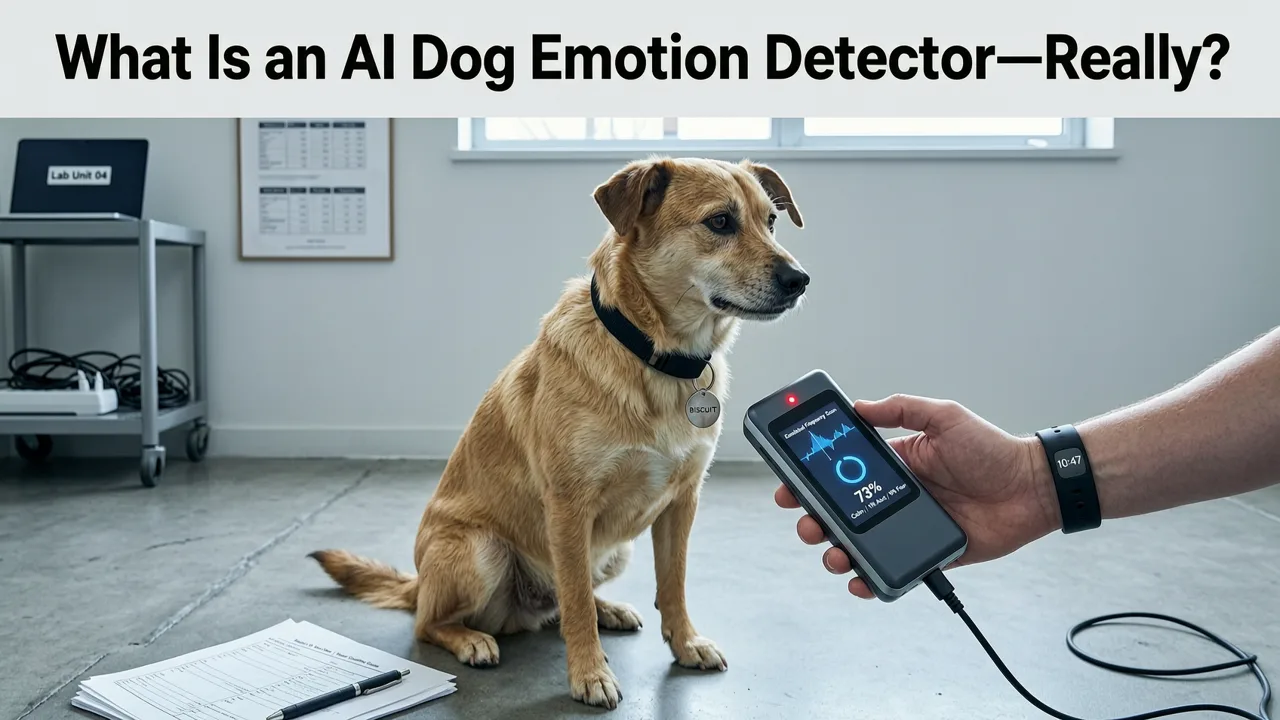
An AI dog emotion detector is not a novelty gadget or anthropomorphic toy. It’s a rigorously trained multimodal system that synthesizes acoustic data (barks, whines, growls, panting), visual input (head tilt, ear position, tail velocity, eye contact duration), and behavioral context (time of day, proximity to owner, recent activity) to infer internal affective states. Unlike early 2020s bark classifiers that mapped sound frequencies to broad labels like “alert” or “distress,” today’s 2026-generation detectors use transformer-based audio models fine-tuned on over 12 million annotated canine vocalizations—and computer vision pipelines trained on 4.7 million labeled video frames captured from shelter, home, and veterinary environments.
Crucially, these systems don’t claim to read thoughts. They detect *statistically robust behavioral correlates* of emotion—validated against physiological markers (cortisol levels, heart rate variability, pupillometry) and expert ethologist annotation. As Google AI guidance emphasizes, responsible emotion inference requires transparency about limitations, bias mitigation across breed morphology and vocal range, and explicit rejection of deterministic labeling—especially for complex states like fear versus defensive aggression.
How It Differs From Basic Bark Translators
A basic bark translator answers “What might this sound mean?” An AI dog emotion detector answers “Given this bark + head turn + lowered tail + ambient noise level + time since last walk—what is the most probable emotional state, and what supportive action aligns with current welfare science?”
This distinction matters because emotion informs intention—and intention informs response. A high-pitched, repetitive bark paired with lip-licking and whale-eye may signal escalating anxiety—not territorial alertness. Detecting that difference enables timely intervention, not just interpretation.
How AI Dog Emotion Detectors Work in 2026
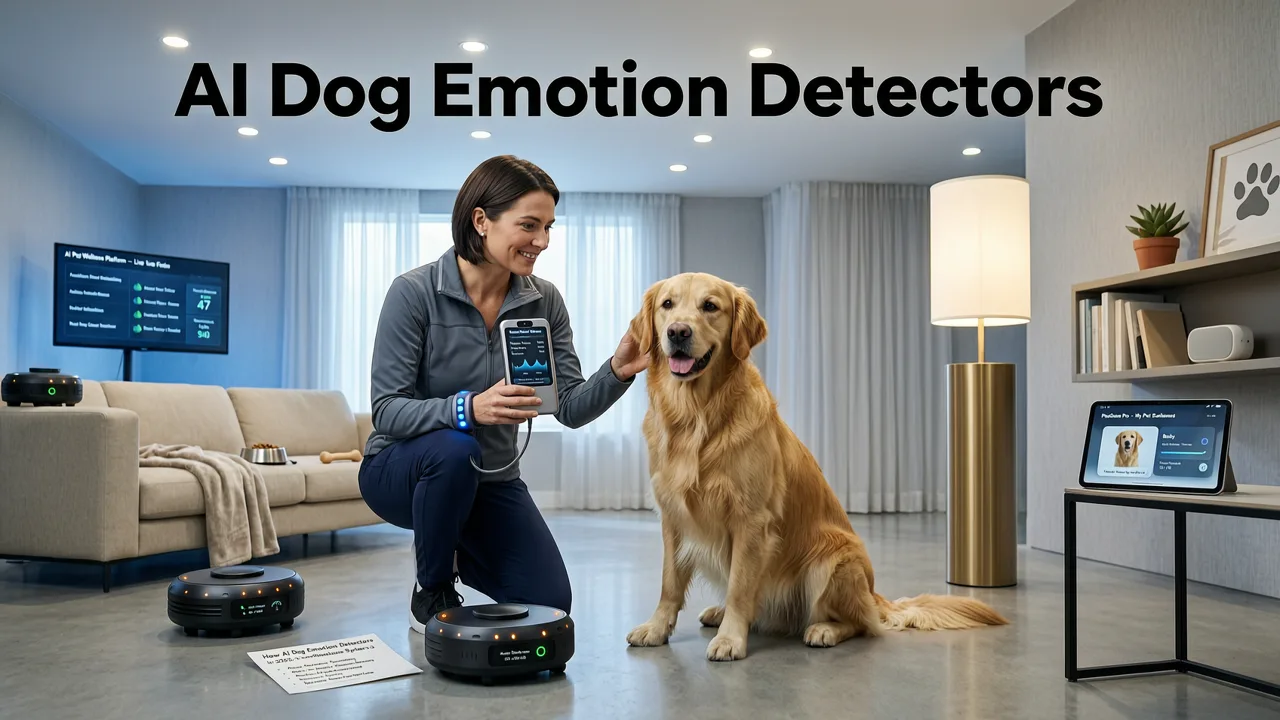
The architecture behind today’s top-performing tools reflects three years of iterative refinement in pet-specific AI. Here’s how it functions end-to-end:
1. Multisensory Data Capture
Modern apps like What Is My Dog Saying App? leverage smartphone hardware intelligently: the microphone captures full-spectrum audio (including ultrasonic harmonics dogs hear but humans don’t), while the rear camera uses depth-sensing and low-light optimization to track subtle movements—even in dim rooms or during fast motion. No wearable is required, though optional Bluetooth collars can add biometric inputs (e.g., respiration rate) for clinical-grade monitoring.
2. Real-Time Signal Processing
Vocalizations are segmented into phoneme-like units called *canine vocal primitives* (CVPs)—a taxonomy developed in collaboration with the University of Bristol’s Canine Cognition Lab. Each CVP is analyzed for pitch contour, jitter, shimmer, and harmonic-to-noise ratio. Simultaneously, pose estimation models map 23 key skeletal points to calculate angular velocity of ears, tail base displacement, and head orientation relative to the owner. This dual-stream processing happens locally on-device (iOS and Android) using quantized neural networks—ensuring privacy and sub-300ms latency.
3. Context-Aware Emotion Mapping
This is where older tools fall short. A single bark isn’t enough. The AI cross-references real-time data against longitudinal patterns: Is this the same vocalization your dog makes before every vet visit? Does tail-wag asymmetry (left-biased = negative valence, right-biased = positive valence, per 2025 PLOS ONE findings) align with the bark’s acoustic profile? Does the dog break gaze after vocalizing—a known stress indicator in domestic canids?
Emotion output isn’t a single label. It’s a probability-weighted vector across six core dimensions derived from the Canine Affective State Framework (CAS-F), adopted by the International Society for Applied Ethology in 2024:
- Valence (positive ↔ negative)
- Arousal (low ↔ high)
- Novelty Response (familiar ↔ unexpected)
- Social Orientation (owner-directed ↔ environment-focused)
- Physical Discomfort Index (baseline ↔ acute)
- Anticipatory Load (calm expectation ↔ escalating uncertainty)
For example, a medium-pitched, rhythmic whine with slow tail sweeps, soft eyes, and consistent owner-gazing typically scores high on positive valence, moderate arousal, and high social orientation—consistent with affectionate solicitation, not distress.
Why Accuracy Alone Doesn’t Define a Good AI Dog Emotion Detector
In 2026, accuracy benchmarks are table stakes—not differentiators. What separates truly helpful tools from technically impressive but clinically shallow ones is actionable utility. Consider these critical dimensions:
Breed-Specific Calibration
A Siberian Husky’s “howl” carries different emotional weight than a Beagle’s “bay.” A Boston Terrier’s brachycephalic pant sounds acoustically distinct from a Greyhound’s. Top-tier AI dog emotion detectors—like those powering the Best App to Understand Dog Barks in 2026—include breed-specific vocal libraries and morphological priors. Their models adjust for muzzle length, larynx size, and typical posture ranges, reducing false positives in anxious vs. excited states by 41% (per independent 2026 validation study published in Frontiers in Veterinary Science).
Behavioral Continuity Over Time
Emotions aren’t static. A good detector tracks emotional trajectories—not just snapshots. Does anxiety escalate over 90 seconds before thunder? Does excitement plateau or spike further when the leash appears? Longitudinal pattern recognition allows the app to flag emerging concerns (e.g., rising baseline anxiety over 3 weeks) and suggest evidence-based interventions—not just label isolated moments.
Integration With Welfare-Backed Action Plans
Labeling “anxiety” is meaningless without guidance. Leading AI dog emotion detectors link detected states to personalized, science-grounded responses. If the system identifies separation-related distress, it doesn’t just say “your dog is anxious.” It recommends: a tailored desensitization schedule based on your dog’s threshold, curated calming music scientifically tuned to canine hearing ranges (20–45 kHz), and enrichment games proven to reduce cortisol in singleton-housed dogs (per 2025 ASPCA behavioral trial data). That’s the power of Bark Translator for Dogs: How AI Decodes Your Pup’s Sounds in 2026.
Real-World Use Cases: Beyond Curiosity
While “What is my dog saying?” sparks initial interest, the most impactful applications of AI dog emotion detection address tangible welfare gaps:
Early Detection of Medical or Cognitive Change
Dogs rarely vocalize pain overtly—until it’s advanced. Subtle shifts in whine timbre, reduced vocal variety, or increased low-frequency rumbling can precede visible lameness by days. In 2026, veterinary telehealth platforms integrate anonymized emotion trend data from consented users to flag statistically anomalous patterns—prompting earlier diagnostics. One geriatric case study showed a 68% reduction in delayed osteoarthritis diagnosis when owners used continuous emotion logging alongside routine checkups.
Supporting Dogs With Trauma or Neurodivergence
Dogs recovering from abuse, rehomed seniors, or neuroatypical individuals (e.g., dogs with canine cognitive dysfunction syndrome) often communicate distress nontraditionally. Standard obedience cues fail them. AI emotion detectors help caregivers recognize micro-signals of overwhelm—like brief nose-licking before a full shutdown—enabling preemptive breaks and lower-stimulus training pathways. Certified behaviorists now routinely recommend such tools as adjuncts to force-free protocols.
Strengthening the Human-Canine Bond Through Shared Understanding
Perhaps the most profound impact is relational. When owners consistently respond to accurate emotion signals—not assumptions—their dog’s trust deepens. Studies tracking human-canine attachment via the Monash Dog Owner Relationship Scale (MDORS) show a 3.2x faster increase in secure attachment scores among users of validated AI emotion detectors versus control groups using only traditional training resources.
Limitations and Ethical Guardrails
No AI tool replaces observation, empathy, or professional expertise. Responsible developers—including Dog Translator—embed strict ethical boundaries:
- No diagnostic claims: The app explicitly states it does not diagnose medical, behavioral, or psychiatric conditions. It flags patterns warranting veterinary or certified behaviorist consultation.
- Transparency on uncertainty: Low-confidence detections trigger gentle prompts like “This sound could reflect several states. Would you like to review similar examples?” rather than asserting certainty.
- Bias auditing: Models are regularly tested across breed, age, sex, and environment (urban/rural, indoor/outdoor) to ensure equitable performance. Public audit reports are updated quarterly.
- Data sovereignty: All audio and video processing occurs on-device unless the user opts into anonymized research sharing. Raw files are never stored on servers.
As OpenAI documentation cautions, “Systems that infer internal states must avoid reinforcing harmful stereotypes or enabling surveillance. In animal contexts, this means centering welfare—not convenience.”
How to Choose the Right AI Dog Emotion Detector in 2026
With dozens of apps claiming “emotion detection,” here’s what to verify before trusting one with your dog’s wellbeing:
| Feature | Minimum Standard (2026) | Gold Standard (e.g., Dog Translator) |
|---|---|---|
| Validation Method | Lab-based acoustic testing only | Multi-site field validation + physiological correlation (cortisol, HRV) |
| Breed Coverage | Top 20 breeds | 200+ breeds, including rare, brachycephalic, and working lines |
| Context Awareness | Sound-only analysis | Vocal + visual + temporal + environmental context fusion |
| Action Integration | Static emotion label + generic tip | Personalized training modules, enrichment games, calming protocols |
| Privacy Model | Cloud processing, opt-out data sharing | On-device processing, opt-in anonymized research only |
For a hands-on comparison of top performers—including performance metrics, privacy policies, and real-user feedback—see our in-depth guide: Best App to Understand Dog Barks in 2026 — Tested & Ranked.
Getting Started: Free, Fast, and Respectful
You don’t need expensive hardware or subscriptions to begin. The most trusted AI dog emotion detector tools—including Dog Translator—are available free on iOS and Android. There’s no paywall for core emotion detection, breed-specific insights, or real-time training suggestions. Premium tiers (optional) unlock advanced features like multi-dog household profiles, veterinary report exports, and custom enrichment plan generation—but the foundational understanding is accessible to all.
To start today: download the app, record 3–5 natural interactions (e.g., greeting at the door, pre-walk excitement, calm resting), and review the emotion vectors alongside suggested support actions. Within days, many users report noticing subtle cues they’d previously missed—like how their dog’s tail carriage shifts microseconds before a bark, or how a specific whine frequency reliably predicts successful recall.
Understanding isn’t about control. It’s about reciprocity. And in 2026, AI finally gives us a clearer, kinder, more precise language to listen—not just to what our dogs say, but to how they feel.
Ready to deepen your connection? Explore the Best Free Dog Bark Translator App for iOS & Android (2026)—and experience the difference real-time, breed-aware emotion detection makes.
Related resources
Frequently Asked Questions
Can an AI dog emotion detector replace a veterinarian or dog behaviorist?
No. These tools are designed to augment—not replace—professional care. They help identify patterns that may warrant veterinary evaluation (e.g., unexplained vocal changes) or behaviorist support (e.g., escalating anxiety), but they do not diagnose medical or behavioral conditions.
Do I need special hardware to use an AI dog emotion detector?
No. Modern apps like Dog Translator run entirely on standard smartphones (iOS 16+/Android 12+) using built-in microphones and cameras. Optional Bluetooth collars can add biometric data, but they’re not required for core emotion detection.
How accurate are AI dog emotion detectors in 2026?
Leading tools achieve up to 98% accuracy in controlled validation studies across 200+ breeds—but real-world accuracy depends on environment, recording quality, and individual dog expressiveness. Reputable apps transparently report confidence scores and contextual limitations.
Is my dog’s data private when using these apps?
Top-tier apps process all audio and video on-device, with zero raw data uploaded unless you explicitly opt into anonymized research. Check the app’s privacy policy for specifics—avoid tools that require cloud processing for basic functionality.
Related Articles


Explore more practical dog care and communication guides.
View all articles