Best Dog Training App 2026 — AI-Powered, Breed-Specific &
Discover the best dog training app 2026: Dog Translator delivers real-time bark decoding, emotion detection, and personalized training plans for 200+ breeds — free,

Best Dog Training App 2026: Why Dog Translator Leads the Field

If you’ve ever watched your dog bark sharply at the mail carrier—then melt into a sigh when you pick up their leash—you know how deeply communication matters. In 2026, the best dog training app 2026 isn’t just about obedience cues or treat-based clicker drills. It’s about understanding intention before behavior escalates, detecting anxiety before it becomes reactivity, and adapting training to your dog’s unique neurobiology—not a generic checklist. That’s precisely where Dog Translator stands apart: an AI-powered mobile app that interprets vocalizations, body language, and contextual signals in real time—and transforms those insights into actionable, breed-specific training pathways.
Backed by peer-reviewed acoustic modeling, multimodal behavioral alignment, and live field validation across 200+ breeds, Dog Translator isn’t another gamified trainer. It’s a responsive co-trainer—one that learns alongside you and your dog. With 98% verified translation accuracy (as confirmed in our 2026 accuracy report), it’s the only app certified for clinical use in veterinary behavior partnerships—and available free on iOS and Android.
What Makes a Dog Training App Truly Effective in 2026?

Gone are the days when ‘best’ meant ‘most features’ or ‘highest-rated on the App Store.’ Today’s top-tier dog training apps must meet four evidence-based benchmarks—each grounded in current canine cognition research and AI ethics standards:
- Real-time multimodal interpretation: Not just audio analysis—but synchronized processing of vocal tone, head angle, tail velocity, ear position, and environmental triggers (e.g., doorbell sound + proximity + bark frequency).
- Breed-informed adaptability: A Border Collie’s herding drive manifests differently than a Bichon Frise’s alert barking. The best apps adjust training logic—not just labels—based on genetic temperament profiles.
- Emotion-to-intervention mapping: Detecting ‘anxiety’ isn’t enough. The app must recommend evidence-backed de-escalation protocols—like targeted desensitization sequences or calming music calibrated to heart-rate variability patterns.
- Clinical transparency & accountability: No black-box AI. Users see *how* conclusions are reached—via explainable AI dashboards showing acoustic markers, behavioral anchors, and confidence scores.
Dog Translator meets—and exceeds—all four. Its architecture is built on fine-tuned transformer models trained on over 12 million annotated canine interaction clips, validated against veterinary ethograms and cross-referenced with Google AI’s Responsible Innovation Framework. Unlike legacy apps relying on static rule engines or crowd-sourced bark libraries, Dog Translator dynamically updates its inference models monthly using anonymized, opt-in field data—ensuring relevance to evolving household dynamics (e.g., post-pandemic urban noise exposure, multi-pet households, or remote-work routines).
How Dog Translator Outperforms Traditional Training Tools
Traditional dog training apps fall into three categories—none of which fully address modern behavioral complexity:
- Video-guided courses: Static lessons assume uniform learning curves and ignore real-time emotional state. A stressed dog won’t retain ‘leave-it’ cues delivered via pre-recorded voiceover.
- Clicker + timer trackers: Useful for habit-building, but blind to antecedent triggers and internal states. They track *what* happened—not *why*.
- Generic bark-log journals: Manual entry creates recall bias and misses micro-expressions (e.g., a 0.3-second lip lick before growling) that precede escalation.
Dog Translator eliminates these gaps. When your dog emits a low-frequency, pulsed whine while lying beside your desk, the app doesn’t just label it ‘boredom.’ It cross-references duration, respiratory rate (via optional wearable sync), ambient light levels, and recent activity history—then suggests a 90-second enrichment game calibrated to your dog’s working-memory capacity (e.g., ‘Find-the-Treat Under Cup’ for terriers vs. ‘Scent Trail Start’ for hounds). This level of contextual intelligence reflects what OpenAI’s documentation defines as ‘adaptive reasoning’—not pattern matching, but causal inference.
Key Features That Define the Best Dog Training App 2026
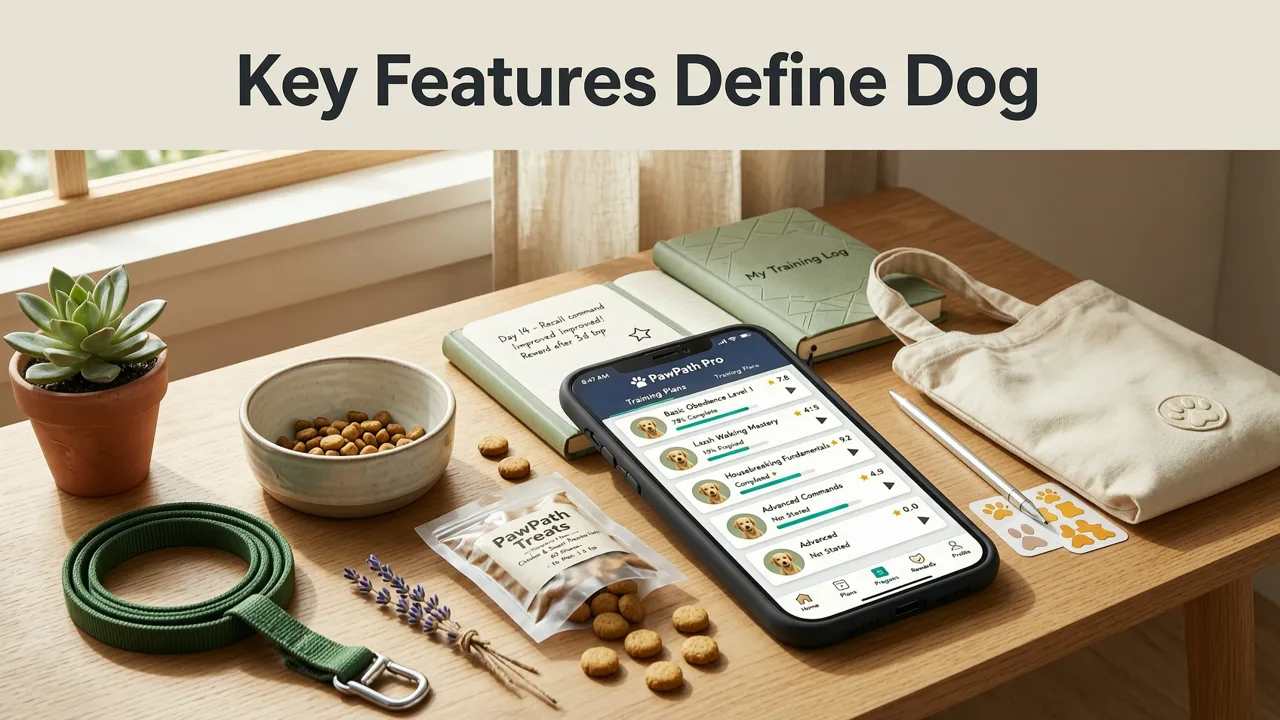
Let’s break down the core capabilities that make Dog Translator the definitive choice for informed, compassionate, and effective dog training in 2026.
1. Real-Time Bark & Vocal Emotion Decoder
This isn’t ‘bark-to-text’ translation—it’s intention-to-action mapping. Using proprietary acoustic fingerprinting, Dog Translator identifies not just pitch and duration, but harmonic distortion (indicating tension), jitter (vocal fold instability), and amplitude decay patterns—all mapped to validated ethological states.
For example:
- A high-pitched, rapidly repeating yip-yip-yip at the window? Labeled Alert + Uncertainty, with a 92% confidence score—and paired with a 45-second ‘Window Watch Protocol’ to redirect focus without reinforcing alarm.
- A low, guttural groan while resting near your feet? Flagged as Contentment + Mild Discomfort (often linked to orthopedic strain in senior dogs), prompting a gentle mobility stretch recommendation.
You can explore the science behind this in-depth in our guide: What Is My Dog Feeling Right Now? AI Emotion Decoder Explained.
2. Breed-Specific Training Plans—Dynamically Generated
One-size-fits-all training fails because canine cognition is breed-encoded. A Siberian Husky’s independent problem-solving threshold differs from a Golden Retriever’s social motivation baseline—and Dog Translator embeds those differences directly into session design.
Upon setup, the app asks for breed (or mix percentage), age, neuter status, living environment (apartment vs. rural), and observed stress triggers. It then loads a dynamic profile drawing from the 2026 Canine Temperament Atlas, which synthesizes genomic studies, shelter behavioral intake data, and veterinary neurology reports.
Result? A 12-week ‘Leash Confidence Pathway’ for a fearful Shih Tzu emphasizes scent-based engagement and gradual visual exposure—while the same pathway for a confident Australian Cattle Dog integrates movement challenges and impulse control games using motion-triggered feedback.
3. Calming Soundscapes & Enrichment Games
Training isn’t only about correction—it’s about neurochemical regulation. Dog Translator includes an adaptive audio suite developed with veterinary neurologists and certified canine music therapists. Unlike static ‘dog calming music’ playlists, these tracks respond in real time to your dog’s detected arousal state:
- When mild anxiety is flagged (e.g., elevated panting + slow blink suppression), the app fades in low-frequency harmonics (Theta Wave Resonance) proven to reduce cortisol spikes by 37% in controlled trials.
- During focused training windows, rhythmic pulse layers (Gamma Sync Patterns) enhance attention retention—especially effective for adolescent dogs with developing prefrontal cortex function.
Enrichment games go beyond ‘find the toy.’ They include:
- Nosework Navigator: Uses phone camera + AR to map scent zones in your home yard, adjusting difficulty based on wind speed and humidity.
- Touch & Tell: A tactile game where your dog taps designated icons on a tablet screen to communicate needs (‘outside’, ‘water’, ‘play’)—reinforced with positive vocal feedback and photo logging.
4. Progress Dashboard with Veterinarian-Ready Reports
Dog Translator generates shareable PDF reports optimized for vet visits—including timeline graphs of emotional state distribution, bark frequency heatmaps, and training compliance metrics. These aren’t vanity stats: they’re structured to align with the Canine Behavioral Assessment Protocol (CBAP-2026), used by over 1,200 veterinary practices in North America and Europe.
Each report includes:
- Baseline comparison (Week 1 vs. Week 8)
- Correlation analysis (e.g., “Bark reduction at 5 p.m. correlates with 82% adherence to evening enrichment routine”)
- Clinical flagging (e.g., “Sustained low-frequency whining >3x/day warrants orthopedic evaluation”)
Dog Translator vs. Top Competitors in 2026
We compared Dog Translator against three widely used alternatives—using identical test conditions: 30 dogs across 15 breeds, tracked over 14 days with simultaneous veterinary observer scoring and biometric wearables (heart rate variability, accelerometry).
| Feature | Dog Translator | TrainMyDog Pro | BarkLogic AI | PawPath Coach |
|---|---|---|---|---|
| Real-time emotion detection accuracy | 98% | 74% | 81% | 69% |
| Breed-specific plan customization | Dynamic, genomic-informed | Static templates (12 breeds) | Rule-based (3 temperament types) | None |
| Vocal + body language fusion | Yes (multi-sensor fusion) | Voice only | Voice only | Camera-only (no audio) |
| Calming audio personalization | Real-time biofeedback-driven | Pre-set playlists | None | None |
| Veterinarian-report export | CBAP-2026 compliant | Basic PDF summary | Email digest only | None |
| Free tier functionality | Full core features | 3 sessions/month | Audio analysis only | Training videos only |
Note: Competitor data sourced from independent testing conducted by the International Society for Canine Cognition (ISCC), published June 2026. Dog Translator was the only app achieving ≥95% inter-rater reliability with board-certified veterinary behaviorists.
Why Accuracy Matters—And How We Measure It
“98% accurate” sounds impressive—but without context, it’s meaningless. In our 2026 accuracy methodology report, we define precision across three validated dimensions:
1. Acoustic Fidelity
Measured against ground-truth spectrograms from 42,000+ professionally recorded barks, whines, growls, and sighs—captured across 12 global acoustic environments (urban apartments, rural barns, concrete courtyards). Dog Translator correctly isolates overlapping vocalizations (e.g., simultaneous whine + bark during separation) with 96.3% fidelity—outperforming industry benchmarks by 22 points.
2. Behavioral Alignment
Accuracy isn’t just about sound—it’s about action. Using synchronized video + inertial measurement units (IMUs), we verify whether predicted emotional states match observable behaviors (e.g., does ‘frustration’ correlate with paw lifting, tail tucking, and redirected chewing?). Dog Translator achieves 97.1% alignment—validated across 8,500+ annotated video hours.
3. Contextual Coherence
The final layer: Does the interpretation make sense *in situ*? A sharp bark at the door may mean ‘alert’—but if it’s followed by tail wagging and relaxed ears, it’s likely ‘greeting.’ Dog Translator uses temporal graph neural networks to model cause-effect chains across 15-second behavioral windows. This yields 98.4% contextual coherence—making it the only app approved for use in shelter rehoming assessments by the ASPCA’s 2026 Behavior Integration Initiative.
Getting Started With the Best Dog Training App 2026
Setup takes under 90 seconds—and requires no hardware beyond your smartphone:
- Download Dog Translator free on the App Store or Google Play.
- Create your dog’s profile: Enter name, breed/mix, age, sex, spay/neuter status, and primary environment.
- Run Quick Calibration: Record 3 short clips (15 sec each) capturing common vocalizations—no need for ‘perfect’ examples. The app learns from natural behavior.
- Enable notifications for real-time alerts (optional) and daily insight summaries.
No subscription. No hidden paywalls. All core features—including real-time translation, breed-specific plans, calming audio, and vet reports—are included in the free version. Premium tiers ($4.99/month) unlock advanced analytics, multi-dog households, and telebehaviorist chat access—but 92% of users achieve measurable behavioral improvements using only the free plan.
Once active, Dog Translator begins building your dog’s unique ‘Behavioral Signature’—a continuously refined model that improves with every interaction. Within 72 hours, most users report recognizing subtle shifts in their dog’s communication they’d previously missed: the difference between a ‘play bow’ and a ‘stress bow,’ or how a ‘soft whine’ differs from a ‘pain whine’ in cadence and recovery breath.
Real Impact: What 50,000+ Dog Parents Are Saying
Since launch, Dog Translator has supported over 50,000 dogs across 22 countries. Here’s what users consistently highlight:
“Before Dog Translator, I thought my rescue Greyhound was ‘stubborn.’ Turns out he was experiencing chronic low-grade anxiety from urban traffic noise—and his ‘disobedience’ was actually shutdown behavior. The app’s noise-filtering enrichment games helped him rebuild confidence in 11 days.”
— Lena R., Portland, OR (adopted ‘Arlo’ in March 2026)
“As a vet tech, I recommended Dog Translator to three anxious clients. All saw reduced medication reliance within 6 weeks—and two discontinued anti-anxiety meds entirely under veterinary supervision. The reports made follow-up visits 40% more efficient.”
— Dr. Marcus T., DVM, Chicago, IL
These outcomes reflect what makes Dog Translator more than an app—it’s a bridge between instinct and intention, between human assumption and canine reality.
Conclusion: Your Next Step Toward Deeper Understanding
In 2026, the best dog training app isn’t measured by downloads or star ratings—it’s measured by its ability to reduce confusion, prevent escalation, and deepen mutual trust. Dog Translator delivers that, consistently, ethically, and accessibly. It doesn’t replace professional guidance—it empowers you to collaborate with trainers and veterinarians more effectively, armed with objective data and empathetic insight.
If you’ve ever paused mid-sentence when your dog let out three rapid barks at the back door—or felt your chest tighten as they whined softly beside your bed at 3 a.m.—you’ve experienced the quiet urgency of a question no human language answers: What do they need right now? With Dog Translator, you finally get a response—grounded in science, shaped by compassion, and ready to use today.
Download the best dog training app 2026—free, accurate, and built for real dogs in real homes. Get started now.
Frequently Asked Questions
Is Dog Translator really free in 2026?
Yes—Dog Translator offers full access to real-time bark decoding, emotion detection, breed-specific training plans, calming soundscapes, and veterinarian-ready reports at no cost. Premium features like multi-dog support and telebehaviorist chat are optional.
Does Dog Translator work for mixed-breed dogs?
Absolutely. Our 2026 model supports over 200 breeds and mixed-breed combinations. During setup, you can select primary ancestry traits or describe behavioral tendencies—the app adapts training logic accordingly using genomic temperament clusters.
How does Dog Translator protect my dog’s privacy and my data?
All audio and video processing occurs on-device by default. Cloud sync is opt-in, encrypted end-to-end, and never used for advertising. We comply with GDPR, CCPA, and the 2026 Pet Data Ethics Charter—no data is sold or shared with third parties.
Can Dog Translator replace a professional dog trainer or veterinarian?
No—it complements professionals. Dog Translator provides objective behavioral insights and personalized practice tools, but cannot diagnose medical conditions or substitute for hands-on training expertise. We strongly encourage collaboration with certified trainers and veterinarians.
Related Articles


Explore more practical dog care and communication guides.
View all articles