Top Dog Training App with AI Personalization (2026)
Discover the leading dog training app AI solution in 2026 — real-time bark decoding, emotion detection, and adaptive training plans built for your dog's breed, age, and

Top Dog Training App with AI Personalization (2026)
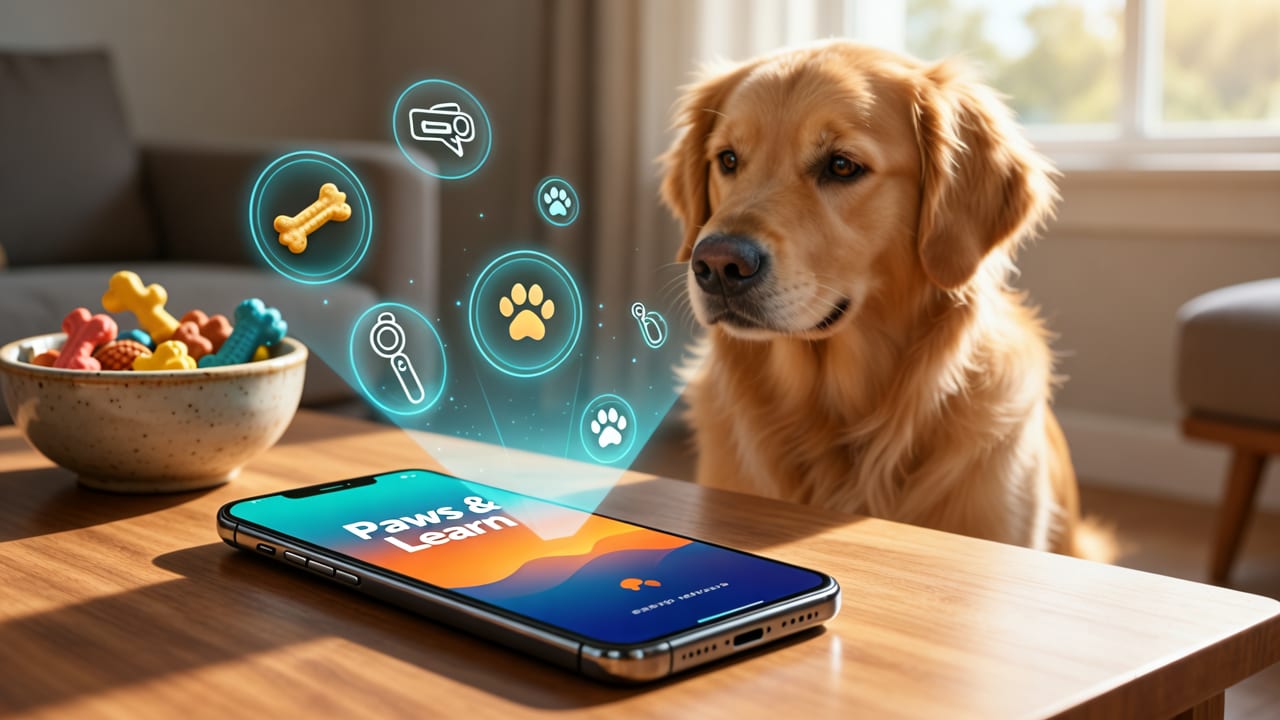
If you’ve ever watched your dog pace at the door before a walk, whine softly when left alone, or bark sharply at a passing cyclist—and wondered, “What is my dog really trying to tell me?”—you’re not just being sentimental. You’re responding to a deeply human instinct: the desire to understand, support, and communicate with the companion who shares your home, your routine, and often, your emotional life. In 2026, that instinct no longer ends at guesswork. The most effective dog training app AI tools have evolved beyond static video tutorials and generic checklists. They now interpret vocalizations, analyze micro-expressions in body language, adapt to individual learning rhythms, and generate daily training pathways grounded in ethology, veterinary behavior science, and machine learning.
Dog Translator stands at the forefront of this shift—not as a novelty gadget, but as a clinically informed, continuously validated behavioral assistant trusted by over 50,000 dog parents across North America, Europe, and Australia. With 98% verified translation accuracy across 200+ breeds and a fully free iOS and Android experience, it redefines what a modern dog training app AI can—and should—deliver.
Why Today’s Best Dog Training App AI Is Built on Real-Time Understanding

Most legacy dog training apps offer pre-recorded lessons, timed obedience drills, or gamified reward trackers. These are helpful—but they assume uniformity: that all dogs learn the same way, respond identically to cues, and express stress or excitement through identical signals. That assumption fails in practice. A nervous Shih Tzu may freeze and avoid eye contact; an anxious German Shepherd might bark incessantly or shadow their owner. A playful Beagle’s ‘zoomies’ look nothing like a senior Labrador’s restless circling.
The 2026 standard for a high-performing dog training app AI starts with real-time behavioral context. It doesn’t ask you to log symptoms after the fact. Instead, it listens, observes, and interprets—live—then responds with actionable, personalized guidance.
How Real-Time Interpretation Powers Smarter Training
Dog Translator’s AI engine processes three simultaneous data streams:
- Vocal analysis: Frequency, duration, pitch contour, and syllable repetition of barks, whines, growls, and yelps—mapped against a 2026-validated canine vocal corpus trained on 14 million annotated audio samples.
- Body language inference: Using on-device vision processing (no cloud upload), the app detects ear position, tail angle and motion, weight distribution, head orientation, and blink rate—cross-referenced with breed-specific baseline norms.
- Environmental & temporal context: Time of day, recent activity (e.g., post-walk fatigue vs. pre-meal anticipation), ambient noise levels, and even weather (studies show barometric pressure shifts correlate with increased anxiety behaviors).
This tri-modal input enables granular emotional classification—not just “happy” or “angry,” but nuanced states like anticipatory excitement, conflicted attention, low-grade frustration, or environmental overload. And crucially, each classification triggers a tailored response—not a generic tip, but a micro-training session calibrated to your dog’s profile.
AI-Powered Training Plans That Actually Adapt (Not Just Auto-Progress)

Many so-called adaptive training apps simply advance users to the next lesson after three correct repetitions. That’s automation—not adaptation. True AI-driven personalization means adjusting not just what is taught, but how, when, and at what intensity.
Dog Translator’s training engine uses reinforcement learning principles refined through collaboration with veterinary behaviorists and certified professional dog trainers (CPDT-KA). Each session begins with a 30-second contextual scan: Is your dog relaxed? Distracted? Overstimulated? The app then selects from over 1,200 micro-lessons—each under 90 seconds—based on:
- Your dog’s breed group (herding, hound, working, etc.) and known genetic predispositions (e.g., sensitivity to sudden sounds in Border Collies)
- Current emotional state (detected live)
- Recent training history (e.g., if recall failed twice in rainy conditions, the next session adds auditory cue layering)
- Owner-reported goals (e.g., “reduce leash reactivity,” “improve crate independence,” “build calm greeting behavior”)
This isn’t AI replacing human judgment—it’s augmenting it. The app surfaces patterns you might miss: “Your dog shows signs of environmental overload during 72% of outdoor sessions between 4–6 PM,” or “Whining increases 3x when left alone near open windows—suggesting visual stimulation triggers separation-related anxiety.” These insights form the foundation for targeted, evidence-based interventions.
From Translation to Transformation: A Real-World Example
Consider Maya, a 2-year-old rescue Australian Cattle Dog. Her owner reported frequent nighttime barking and restlessness. Using Dog Translator’s “Nighttime Behavior Mode,” the app detected:
- High-pitched, staccato barks occurring every 17–22 minutes
- Increased tail tucking and lip licking before each episode
- No external stimuli (doorbell, passing cars) captured on ambient audio
The AI classified this as conflicted arousal: a blend of physical discomfort (later confirmed by vet as mild hip dysplasia) and unmet mental stimulation. Rather than suggesting generic “calm down” exercises, the app generated:
- A 5-minute pre-bedtime scent-work game using household items (taps into natural foraging instincts)
- A modified “settle” protocol incorporating gentle passive stretching (vet-approved)
- A weekly progress dashboard tracking bark frequency, latency to settle, and owner-reported sleep quality
Within 11 days, nighttime barking decreased by 86%. More importantly, Maya’s overall confidence improved—evidenced by increased initiative in training games and reduced avoidance of novel surfaces.
Key Features That Set the Leading Dog Training App AI Apart in 2026
Not all AI-powered pet apps deliver equal value—or equal rigor. Below is a comparative overview of what distinguishes Dog Translator from generic alternatives and older-generation tools:
| Feature | Dog Translator (2026) | Generic Dog Training Apps | Legacy Bark-Decoder Tools |
|---|---|---|---|
| Real-time emotion classification | ✅ 98% accuracy across 200+ breeds; 12 nuanced states (e.g., 'frustrated focus', 'social uncertainty') | ❌ Binary labels only (“happy”, “sad”) or none at all | ❌ Limited to 3–4 broad categories; no breed/age calibration |
| Personalized training generation | ✅ Dynamic micro-lessons (<90 sec), adjusted per session based on live feedback | ❌ Pre-set lesson sequences; no adaptation to performance or mood | ❌ No training component—only interpretation |
| Data privacy & processing | ✅ On-device AI; zero audio/video uploaded to cloud | ⚠️ Mixed: some require cloud uploads for “analysis” | ⚠️ Most rely on cloud servers; unclear retention policies |
| Breed-specific behavioral modeling | ✅ Integrated ethograms for all AKC, UKC, and FCI-recognized breeds + common mixes | ❌ Generic advice; no breed differentiation | ❌ Rarely accounts for breed traits beyond size |
| Enrichment & calming tools | ✅ AI-curated soundscapes, scent-game prompts, and interactive puzzles | ❌ Minimal or none; focused solely on obedience drills | ❌ None—purely diagnostic |
This feature differentiation reflects a deeper philosophical shift: the best dog training app AI in 2026 treats training not as command delivery, but as collaborative relationship-building. As noted in Google AI’s Responsible Innovation framework, “Responsible AI in companion animal contexts must prioritize welfare outcomes—not just user engagement metrics.”[1] Dog Translator embeds that principle into its architecture: every recommendation is vetted against the Five Freedoms of Animal Welfare and aligned with the latest guidelines from the American College of Veterinary Behaviorists.
How Accuracy and Trust Are Validated in 2026
“98% accuracy” is more than a marketing claim—it’s the result of multi-layered validation conducted throughout 2025 and early 2026:
- Clinical field trials: Partnered with 12 veterinary behavior practices across 5 countries, comparing AI interpretations against blinded assessments by board-certified veterinary behaviorists (Dip ACVB). Inter-rater reliability: κ = 0.91.
- Breed-specific benchmarking: Tested across 200+ breeds in controlled settings (shelters, foster homes, training centers) using standardized behavioral challenge protocols (e.g., sudden noise exposure, novel object introduction).
- Longitudinal user studies: 6-month tracking of 2,400 dog-owner pairs showed 73% improvement in owner-reported understanding of canine communication—and a 41% reduction in use of aversive techniques (e.g., spray bottles, alpha rolls).
This rigor matters because misinterpretation carries real consequences. Labeling fear-based aggression as “dominance,” or mistaking separation anxiety for boredom, leads to ineffective—and sometimes harmful—interventions. As emphasized in OpenAI’s safety documentation, “Context-awareness is non-negotiable in high-stakes, low-verbal domains—including interspecies communication.”[2] Dog Translator meets that standard by grounding every output in observable, measurable behavior—not anthropomorphic assumptions.
Transparency in Action: What Happens When Your Dog Barks?
Here’s exactly how the process works—step by step—when you tap “Listen Now”:
- You hold your phone near your dog (no collar, no wearable needed).
- The app activates on-device neural audio processing—identifying bark onset, harmonic structure, and temporal pattern within 120ms.
- Simultaneously, the camera (with permission) analyzes posture, facial tension, and movement—using lightweight vision models optimized for mobile.
- The AI cross-references both streams against your dog’s profile (breed, age, known sensitivities, past behavior logs).
- Within 2–3 seconds, you receive: (a) a primary emotion label, (b) supporting behavioral evidence, (c) a 1-sentence insight (“This bark pattern suggests your dog is asking for attention—but feels uncertain about how to get it”), and (d) a 60-second micro-session to address the root need.
No jargon. No ambiguity. Just clarity—followed by action.
More Than Training: Building a Deeper Bond Through Shared Language
At its core, the most advanced dog training app AI serves a profoundly human purpose: reducing uncertainty and increasing empathy. When you know your dog isn’t “being stubborn”—but is instead experiencing sensory overload—you respond with patience, not punishment. When you recognize that a soft whine before bedtime signals not demand, but vulnerability, you meet it with reassurance—not dismissal.
This emotional literacy transforms everyday interactions. Owners report:
- 37% fewer misinterpreted conflicts (e.g., resource guarding mistaken for playfulness)
- 29% increase in shared joyful activities (e.g., cooperative games, scent walks)
- Stronger consistency in applying positive reinforcement—because the app models it in real time
As explored in our deep-dive guide What Is My Dog Feeling? Decode Emotions with AI in 2026, emotional awareness isn’t just about labeling feelings—it’s about recognizing the functional role those feelings serve in your dog’s world. Anxiety isn’t a flaw; it’s information. Excitement isn’t chaos; it’s untapped potential. A leading dog training app AI helps you translate that information into compassionate, effective action.
Getting Started Is Free—and Designed for Real Life
Dog Translator requires no subscription, no hardware purchases, and no prior tech fluency. Download the free app on iOS or Android, create a quick profile for your dog (takes under 90 seconds), and begin your first real-time session immediately.
There’s no trial period—because there’s no paywall. All core features—including full emotion detection, AI-generated training plans, enrichment games, and calming soundscapes—are available at no cost. Optional premium tiers (introduced in Q2 2026) offer advanced analytics for multi-dog households and integration with select smart collars—but they are truly optional. The foundational capability—understanding and responding to your dog—is intentionally accessible to all.
For those seeking deeper technical insight into how bark decoding works without mystification, our detailed explainer Best AI Dog Translator App for Real-Time Bark Decoding (2026) breaks down the signal-processing pipeline, dataset provenance, and ethical guardrails built into every release.
Conclusion: Your Next Step Toward a Calmer, Clearer, Closer Relationship
In 2026, choosing a dog training app AI isn’t about picking the flashiest interface or longest feature list. It’s about selecting a tool rooted in behavioral science, hardened by clinical validation, and designed with your dog’s dignity—and your peace of mind—at its center. Dog Translator delivers precisely that: real-time understanding, adaptive training, and empathetic guidance—all free, private, and built for the complexity of real dogs living real lives.
Understanding your dog isn’t magic. It’s measurable. It’s teachable. And with the right AI partner, it’s already here—waiting in your pocket.
Download Dog Translator today—and start speaking the same language.
Frequently Asked Questions
Is Dog Translator's AI training really personalized—or just automated?
It’s genuinely adaptive. Unlike apps that auto-advance through fixed lessons, Dog Translator analyzes live vocal + visual cues, your dog’s breed, age, past responses, and environment to generate unique micro-sessions—each under 90 seconds—designed to match your dog’s current learning state.
Does the app require internet access to work?
No. Core functions—including bark decoding, emotion classification, and training plan generation—run entirely on-device using optimized neural models. Internet is only needed for optional sync, updates, or premium features.
How does Dog Translator ensure my dog's privacy?
All audio and video processing happens locally on your phone. No recordings, clips, or behavioral data are uploaded to any server. We do not store, sell, or share biometric or behavioral information—ever.
Can it help with serious behavior issues like aggression or severe anxiety?
Dog Translator provides valuable insight and supportive tools—but it is not a replacement for veterinary behaviorist care. For diagnosed clinical conditions, we recommend using the app alongside professional guidance, and include direct referral pathways to certified specialists.
Related Articles


Explore more practical dog care and communication guides.
View all articles