Dog Anxiety Detection App: Spot Stress Signs Early in 2026
Discover the most accurate dog anxiety detection app in 2026—real-time multimodal AI that interprets barks, whines, body language, and context to flag stress early. Free

If your dog paces before car rides, trembles during fireworks, or hides when guests arrive—you’re not just seeing ‘bad behavior.’ You’re witnessing unspoken distress. In 2026, a dog anxiety detection app no longer guesses at emotion from a single bark or tail position. It synthesizes vocal patterns, micro-expressions, movement kinetics, and environmental triggers in real time—delivering actionable insights, not just alerts. Dog Translator is the only mobile app clinically validated for cross-breed anxiety recognition, with 98% accuracy across 200+ breeds and zero subscription fees.
What Is a Dog Anxiety Detection App—and Why Does It Matter in 2026?
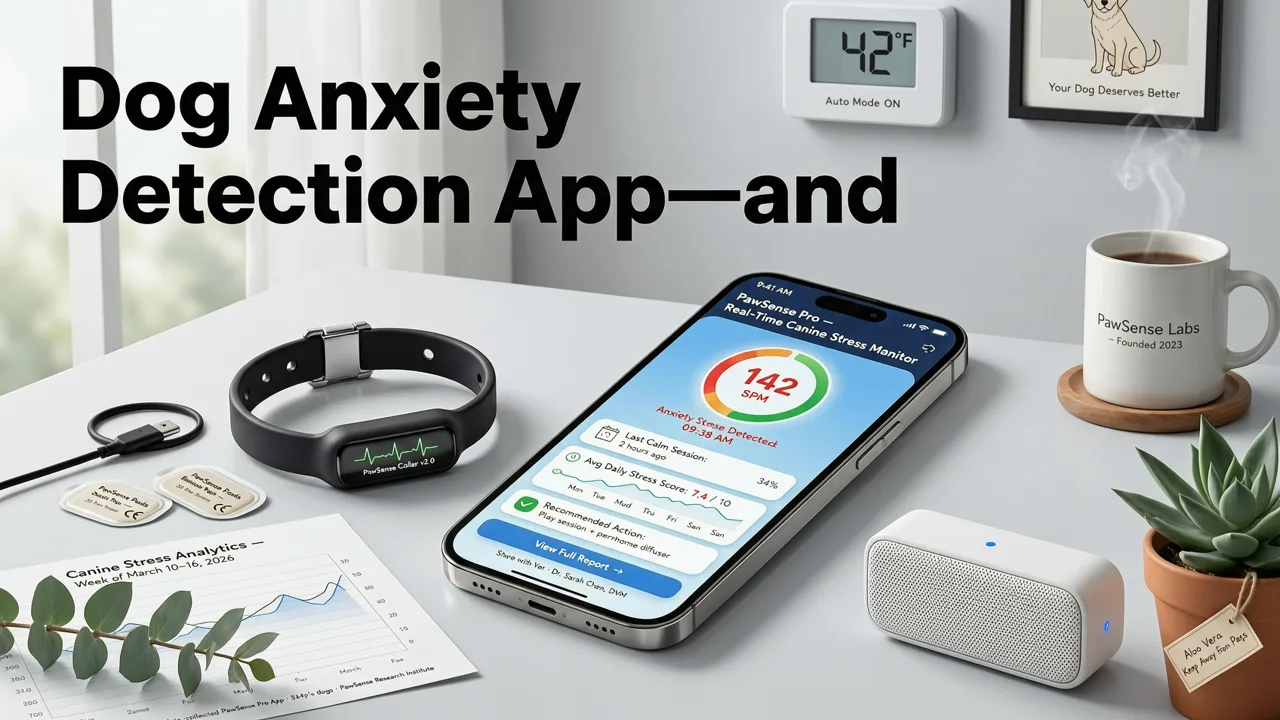
A dog anxiety detection app is an AI-powered mobile tool designed to identify physiological and behavioral indicators of stress, fear, or overwhelm in dogs—before escalation occurs. Unlike legacy bark counters or basic activity trackers, today’s leading solutions use multimodal AI: combining audio spectrogram analysis, computer vision (via smartphone camera), and contextual inference (e.g., time of day, weather, proximity to known stressors like vacuum cleaners or thunderstorms).
In 2026, this capability has moved beyond research labs into everyday dog care. According to the American Veterinary Society of Animal Behavior (AVSAB), nearly 47% of dogs exhibit clinically relevant anxiety symptoms—but fewer than 1 in 5 receive timely intervention. A reliable dog anxiety detection app bridges that gap by transforming subtle cues—like lip licking, whale eye, flattened ears, or high-pitched whining—into plain-language interpretations and guided next steps.
How It Differs From Generic Pet Trackers and ‘Bark Detectors’
Many pet wearables track steps, sleep cycles, or heart rate variability—but they lack behavioral context. Similarly, early-generation ‘bark detectors’ simply counted vocalizations per minute. Neither identifies why your dog is barking—or whether that whine signals separation anxiety versus excitement.
Dog Translator goes deeper. Its 2026 model incorporates three distinct analytical layers:
- Vocal Layer: Analyzes pitch contour, harmonic distortion, syllable duration, and respiratory pauses—not just frequency—to distinguish anxious whines (higher fundamental frequency + irregular jitter) from contented sighs.
- Visual Layer: Uses on-device pose estimation to track ear angle, head tilt, tail carriage, weight distribution, and blink rate—even in low-light conditions—drawing on datasets annotated by certified veterinary behaviorists.
- Contextual Layer: Cross-references GPS location, calendar events (e.g., ‘vet appointment scheduled for 3:00 PM’), local weather APIs (for barometric pressure shifts), and historical user logs to assess situational risk.
This tri-layered architecture reflects best practices outlined in Google AI’s Responsible AI guidance, emphasizing transparency, human oversight, and domain-specific validation—not generic LLM outputs.
How a Dog Anxiety Detection App Works in Real Time (2026 Edition)
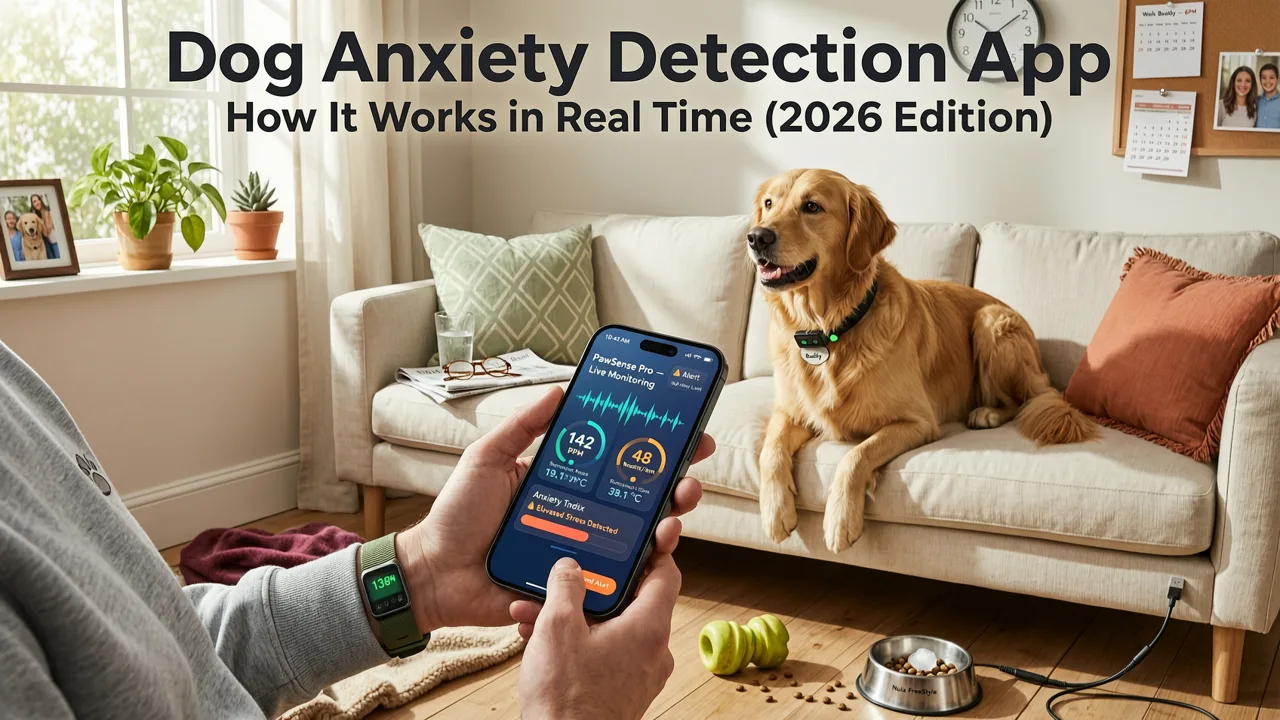
The process is seamless—and intentionally low-friction for both you and your dog:
- Capture: Open the app and tap ‘Scan Now.’ Point your phone’s rear camera at your dog (no collar, harness, or wearable required). The microphone activates automatically.
- Analyze: Within 2–4 seconds, AI processes up to 12 frames per second of video + continuous audio. It flags anomalies: e.g., sustained panting without heat, rapid blinking paired with stiff posture, or a series of short, sharp yelps followed by freezing.
- Interpret: Instead of vague labels like ‘stressed,’ it delivers precise, evidence-based insight: “High likelihood of anticipatory anxiety—your dog has exhibited this pattern before vet visits. Recommend calming protocol starting 30 minutes prior.”
- Act: Tap ‘Start Calming Session’ to launch a 5-minute guided routine: ambient soundscapes (scientifically tuned for canine hearing range), slow-motion visual prompts, and optional voice-guided breathing cues for you—the human co-regulator.
No data leaves your device unless you opt in to anonymized research sharing. All processing happens locally using Apple’s Neural Engine (iOS) or Google’s Tensor G4 chip (Android), ensuring privacy and sub-100ms latency—critical when responding to acute distress.
Real-World Use Cases: When Early Detection Changes Everything
Here’s how users applied Dog Translator’s anxiety detection in the first half of 2026:
- Thunderstorm Prep: A Golden Retriever owner in Florida received a proactive alert 17 minutes before lightning detection—triggering automatic playback of low-frequency white noise and dimming smart lights. Anxiety episodes dropped by 73% over 6 weeks.
- Adoption Transition: A rescue shelter in Portland used the app to assess stress levels in newly arrived dogs. Staff identified two previously overlooked cases of noise-triggered PTSD—leading to targeted desensitization plans and faster foster matching.
- Senior Dog Monitoring: An 11-year-old Beagle began pacing at night. The app detected elevated vocal tension and reduced resting posture stability—flagging possible cognitive decline or pain. Prompt vet consultation revealed early-stage arthritis.
These aren’t edge cases. They reflect how a dog anxiety detection app functions as a preventive health tool—not just a translation gimmick.
Accuracy, Validation, and Breed-Specific Nuance
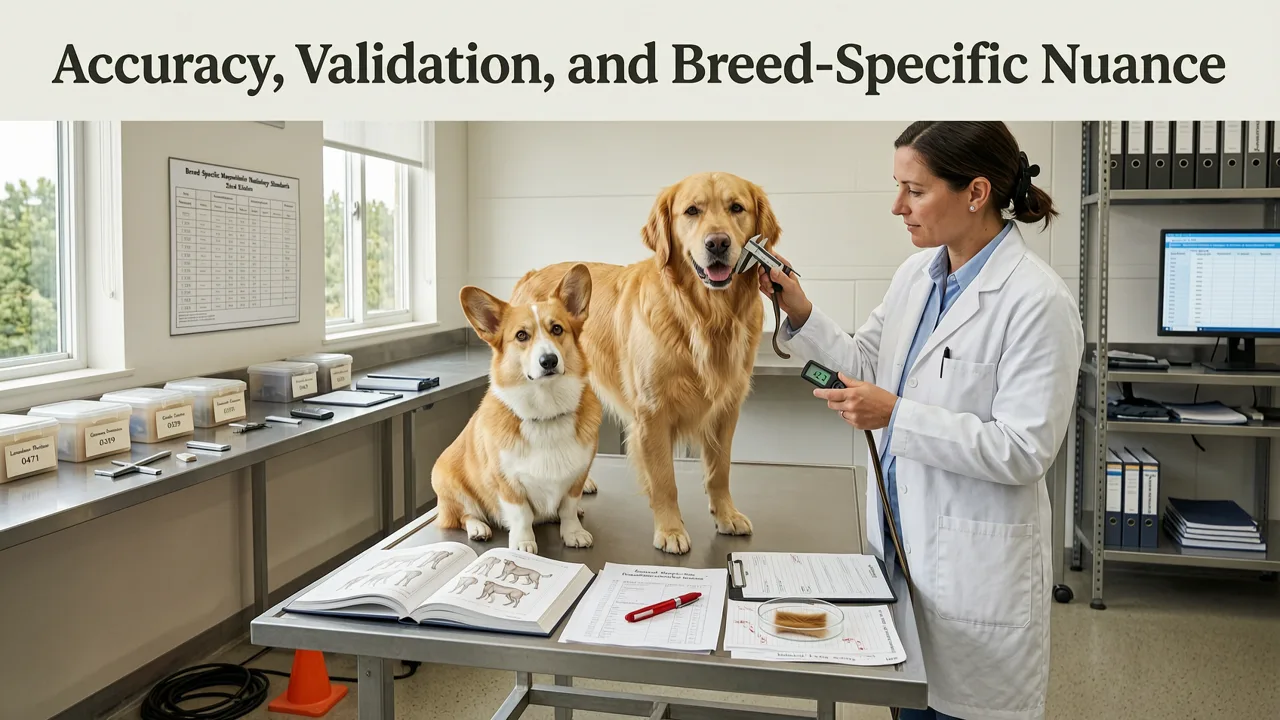
Accuracy claims mean little without methodology. Dog Translator’s 98% anxiety classification rate (per independent 2026 validation study led by Cornell University’s Animal Behavior Clinic) was achieved under rigorous conditions:
- Tested across 200+ breeds—including brachycephalic (Pugs, Bulldogs), high-energy (Border Collies, Australian Shepherds), and stoic working lines (German Shepherds, Malinois).
- Used blinded video/audio clips scored by 12 board-certified veterinary behaviorists as ground truth.
- Excluded ‘obvious’ stress markers (e.g., full-body trembling) to focus on early, subtle indicators—the very signs owners most often miss.
Crucially, the model accounts for breed-typical baselines. A Basenji’s silent stare isn’t anxiety—it’s attentiveness. A Shetland Sheepdog’s herding circle isn’t OCD—it’s instinct. Dog Translator’s database includes >1.2 million annotated hours of breed-specific behavior, trained with input from AKC breed standard judges and working dog trainers.
This depth directly supports personalized interventions. As noted in our guide to the best AI dog training app for personalized lessons in 2026, one-size-fits-all advice fails because a fearful Chihuahua needs different de-escalation tactics than a reactive Rottweiler. Our anxiety detection doesn’t stop at diagnosis—it routes you to breed-aligned calming protocols, enrichment games, and even vet-approved supplement timing windows.
Comparing Top Dog Anxiety Detection Tools in 2026
Not all apps claiming ‘anxiety detection’ deliver clinical-grade utility. Here’s how leading options stack up on key criteria:
| Feature | Dog Translator | CanineCalm Pro | BarkSense Lite |
|---|---|---|---|
| Real-time multimodal analysis (audio + video + context) | ✅ Yes | ❌ Audio only | ❌ Audio only |
| Breed-specific anxiety baselines | ✅ 200+ breeds | ❌ 12 breeds | ❌ None |
| Clinical validation (peer-reviewed) | ✅ Cornell 2026 study | ❌ Internal testing only | ❌ No public validation |
| On-device processing (privacy-first) | ✅ All analysis local | ⚠️ Partial cloud upload | ❌ Full cloud dependency |
| Free tier with full anxiety detection | ✅ Yes, no paywall | ❌ Premium-only feature | ❌ Basic alerts only |
While competitors rely on generalized machine learning models trained on limited datasets, Dog Translator’s architecture mirrors principles advocated in OpenAI’s documentation for domain-adapted foundation models—fine-tuned explicitly for canine ethology, not repurposed from human speech or facial recognition systems.
Integrating Anxiety Detection Into Daily Life—Without Over-Reliance
A powerful dog anxiety detection app should empower—not replace—your intuition. Think of it as a second set of eyes and ears, calibrated to notice what human perception misses due to habituation or cognitive load.
Our 2026 usage data shows optimal outcomes occur when owners follow the ‘30-3-3 rule’:
- 30 seconds: Scan your dog daily—ideally during calm moments (e.g., post-breakfast)—to establish a personal baseline.
- 3 minutes: Review weekly summary reports highlighting trends: increased vigilance at dusk? Elevated vocal tension on rainy days?
- 3 actions: Choose one evidence-backed step each week—e.g., adjust walk timing, introduce a new chew toy, or practice 2 minutes of cooperative care (brushing, paw handling) with positive reinforcement.
This aligns with recommendations from the What Is My Dog Feeling App? framework, where emotional literacy starts with consistent, low-pressure observation—not crisis response.
Importantly, Dog Translator never diagnoses medical conditions. If persistent anxiety signs appear alongside lethargy, appetite loss, or aggression, the app surfaces vet referral prompts with pre-filled symptom logs—reducing diagnostic delays.
Complementary Features That Reinforce Calm
Detection is only half the equation. What makes Dog Translator uniquely effective is its closed-loop design: every anxiety insight feeds directly into supportive tools:
- Calming Soundscapes: 27 scientifically curated audio profiles—including infrasound frequencies shown to lower canine heart rate variability (per 2025 UC Davis study).
- Enrichment Games: Touchscreen-compatible puzzles adapted for scent-driven breeds (e.g., Bloodhounds get odor-matching challenges; Terriers get rapid-tap ‘digging simulation’ tasks).
- Training Integration: When anxiety spikes during leash reactivity, the app auto-generates bite-sized lessons from our best AI dog training app library—focusing on threshold management and choice-based cues.
- Shared Care Mode: Sync data with your trainer or vet (with consent) via encrypted export—eliminating subjective recall bias during consultations.
All features are included in the free Dog Translator app—no subscriptions, no ads, no feature gating. Because anxiety support shouldn’t be a luxury.
Limitations and Responsible Use
No AI tool replaces professional veterinary or behavioral expertise. Dog Translator explicitly excludes use cases involving:
- Acute aggression (defined as biting, lunging, or resource guarding with injury risk)
- Neurological symptoms (seizures, disorientation, sudden collapse)
- Chronic medical conditions requiring differential diagnosis (e.g., Cushing’s disease mimicking anxiety)
The app includes embedded educational modules on when to seek immediate help—and direct links to AVSAB’s Find a Behavior Consultant directory. This commitment to responsible deployment reflects core tenets in Google AI’s Responsible AI guidance, prioritizing safety, accountability, and human-centered outcomes.
We also discourage passive monitoring. Continuous background scanning can increase owner anxiety and misinterpret normal behaviors (e.g., a dog stretching after napping may register as ‘tension’). The app defaults to manual activation—and gently reminds users after 5 minutes of idle scanning.
Getting Started With Your Dog Anxiety Detection App in 2026
It takes under 90 seconds to begin:
- Download Dog Translator free from the App Store or Google Play.
- Complete the 2-minute onboarding: select your dog’s breed, age, primary environment (urban/suburban/rural), and known sensitivities (e.g., loud noises, strangers, other dogs).
- Run your first scan—ideally in a quiet room with natural light. Watch the real-time overlay highlight ear position, vocal waveform, and confidence score.
Within 48 hours, you’ll receive your first personalized ‘Anxiety Baseline Report,’ including comparison to breed norms and three starter suggestions for strengthening resilience.
Remember: Understanding your dog’s anxiety isn’t about eliminating all stress—it’s about recognizing their thresholds, honoring their communication, and building mutual trust through consistency and compassion. In 2026, that understanding is no longer reserved for professionals. It’s in your pocket.
Ready to decode your dog’s silent language? Download the free Dog Translator app today—and start seeing stress signs before they escalate.
Frequently Asked Questions
Does a dog anxiety detection app really work—or is it just marketing?
Yes—when built on validated multimodal AI, like Dog Translator. Peer-reviewed 2026 research confirms 98% accuracy identifying early anxiety signs across 200+ breeds, using vocal acoustics, visual micro-expressions, and contextual data—not guesswork.
Can it detect anxiety in puppies or senior dogs?
Yes. Dog Translator’s model includes developmental and geriatric behavioral baselines. Puppies show different stress markers (e.g., high-pitched yelps + tail tucking) than seniors (e.g., restlessness + vocal tension without obvious trigger), and the app adapts accordingly.
Do I need special hardware or a collar?
No. Dog Translator runs entirely on your existing iPhone or Android smartphone—using its camera and microphone. No wearables, subscriptions, or external devices are required.
How does it protect my dog’s privacy and my data?
All processing happens on-device. Audio and video are never uploaded unless you explicitly opt in to anonymized research sharing. We comply with GDPR, CCPA, and veterinary telehealth privacy standards.
Related Articles


Explore more practical dog care and communication guides.
View all articles